Modern · The Americas · 1900 - Present
History of Denim and Jeans: From Workwear to Fashion
Separate denim's textile history from the history of riveted jeans, then follow work clothing into leisurewear, counterculture, and designer collections.
By Dan Schnau · Last updated
The history of denim and the history of jeans overlap, but they are not identical. Denim is a fabric that predates the famous 1873 patent. That patent concerned a way of reinforcing pocket openings with metal rivets or eyelets, rather than the invention of cotton cloth or trousers themselves.1,2
The American frontier clothing guide covers miners and other working communities in greater detail. This page follows the fabric and garment into later fashion.
Where Did Denim Come From?
Lynn Downey, formerly Levi Strauss & Co.'s historian, discusses uncertainty around the familiar derivation of denim from “serge de Nîmes.” Historical fabrics with related names were not necessarily identical to later cotton denim: some contained wool or silk, and a geographical name did not always guarantee where a fabric was produced.1
Downey also distinguishes denim from an earlier fabric called jean. This makes the history more complicated than the story of a single French town inventing modern blue jeans. Her account is useful precisely because it separates documented textile terminology from a neat origin legend.1
What Was Patented in 1873?
U.S. patent 139,121, dated 20 May 1873, is titled “Improvement in Fastening Pocket-Openings.” Jacob W. Davis describes using metal fasteners where pocket seams were vulnerable to strain. The document identifies him as assigning the invention to himself and Levi Strauss & Co. It supplies a specific answer to what the partnership protected.2
The mechanism transferred stress away from the sewing thread by securing the cloth at the ends of the opening. The specification even acknowledged earlier use of rivets in shoes. Read as a technical document, it is about a particular reinforcement method, rather than a claim to every later feature of the jean.2
From Work Pants to the Western Image
The company's archival account describes the 501 as a work pant that became strongly associated with cowboy clothing in the 1930s and 1940s. It then follows the garment into wartime wear and film, including Marlon Brando's appearance in The Wild One. These are stages in its changing cultural image, rather than evidence that nineteenth-century workers already understood jeans as a symbol of teenage rebellion.3
That source is written by the manufacturer's historian, so its perspective is part of the evidence. A museum's broader survey can place Levi's alongside other makers and other kinds of denim garment.3,4
Denim Was More Than Men's Trousers
The Museum at FIT's Denim: Fashion's Frontier exhibition included a woman's denim play ensemble from the 1930s and Claire McCardell's 1942 Pop Over dress. It also discussed women's wartime jumpsuits. These objects make a useful counterpoint to histories that discuss only the familiar five-pocket jean.4
The exhibition also included an Elsa Schiaparelli couture blouse that imitated denim's appearance. That distinction matters: an outfit could participate in denim's fashion associations without being ordinary denim workwear.4
Counterculture and Designer Jeans
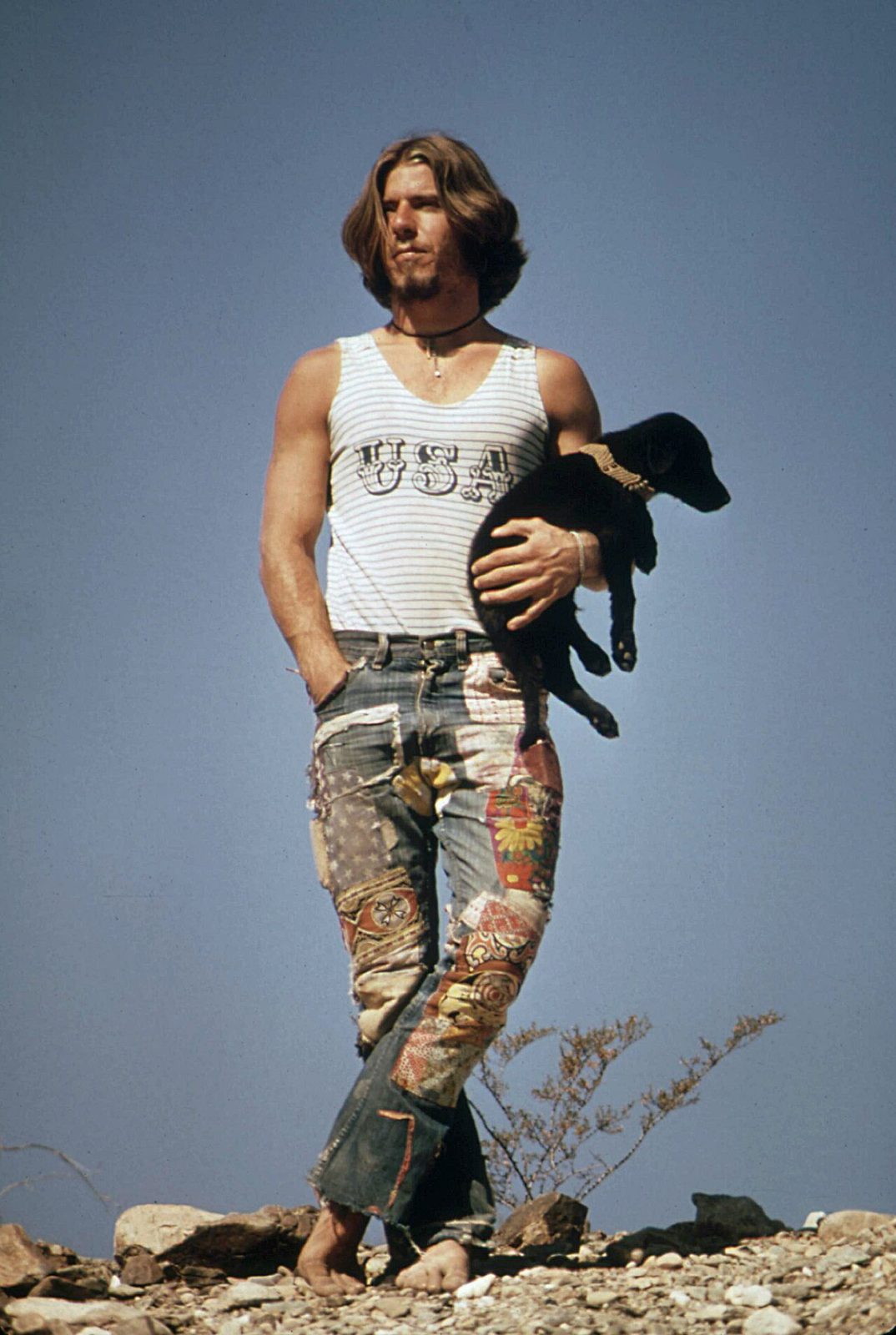
FIT traced patched, embroidered, and bell-bottom styles through the counterculture and into the mainstream. Its examples connected the early 1970s with designers such as Yves Saint Laurent and later European jeans brands. The exhibition presents a change in denim's uses, rather than a clean break in which workwear simply disappeared.4

A Few Dates to Keep Separate
| Date or period | What it refers to |
|---|---|
| Before 1873 | Denim's earlier existence as a textile.1 |
| 20 May 1873 | The pocket-reinforcement patent.2 |
| 1930s–1940s | The 501's association with the Western cowboy image in the company's account.3 |
| 1942 | McCardell's denim Pop Over dress in FIT's exhibition.4 |
| 1971 | Levi Strauss & Co.'s Coty Award for international fashion influence, discussed by its historian.3 |
For the wider fashion setting, continue to modern American clothing or compare another changing foundation of dress in the history of corsets.
Sources
- A Short History of Denim — Lynn Downey, Levi Strauss & Co., 2014 (textile terminology and disputed origin stories).
- U.S. patent 139,121: Improvement in Fastening Pocket-Openings — Jacob W. Davis, 20 May 1873, primary patent text via Google Patents.
- The 501 Jean in Fashion History: Insights from a New Denim Exhibit — Tracey Panek, Levi Strauss & Co., 2016 (company archival perspective).
- Denim: Fashion's Frontier — Emma McClendon, Museum at FIT, 2015–2016 (museum garments, leisurewear, wartime dress, and designer denim).