North American Dress: Frontier to Factory
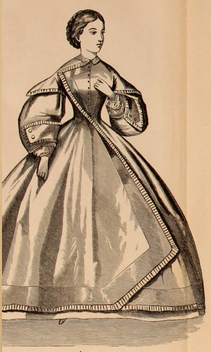
Early 19th-century American clothing largely followed European fashions, imported or copied from pattern books and fashion plates. But the realities of frontier life demanded practical adaptations. On the expanding western frontier, men wore buckskin jackets and trousers influenced by Indigenous garment traditions, sturdy denim work clothes, and wide-brimmed hats for sun protection. The California Gold Rush of 1849 helped popularize rugged work wear — Levi Strauss and Jacob Davis patented their riveted blue jeans in 1873, creating what would become America's most iconic garment.
For the urban middle class, the century brought a revolution in how clothing was obtained. The rise of department stores — Macy's in New York, Marshall Field's in Chicago, Wanamaker's in Philadelphia — made fashionable ready-to-wear clothing accessible to a broad public. The sewing machine, patented by Isaac Singer in the 1850s, transformed both home sewing and industrial garment production. By century's end, American women could order the latest styles from mail-order catalogs like Sears, Roebuck and Co., bringing fashion to even the most remote communities.
Frontier and Indigenous Dress
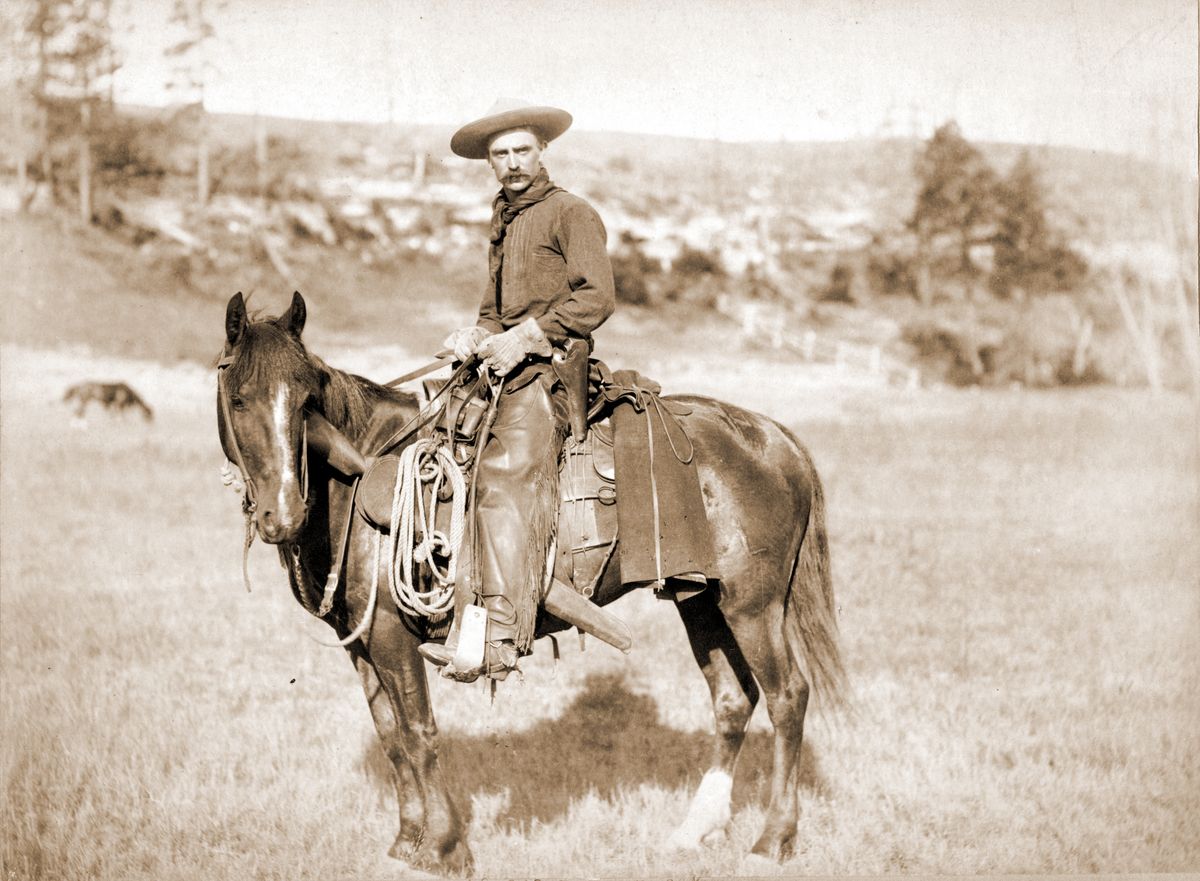 Photo by J.C.H. Grabill, Library of Congress. Wikimedia Commons, Public Domain.

The American frontier produced a distinctive clothing culture shaped by necessity, cross-cultural exchange, and the harsh demands of westward expansion. Mountain men and fur trappers of the early 19th century adopted garments from Indigenous peoples, wearing fringed buckskin shirts and leggings made from brain-tanned deer hide — a soft, pliable material well suited to life in the wilderness. These garments, often decorated with quillwork or later beadwork, represented a practical fusion of European and Native American clothing traditions that became iconic of the frontier era. Cowboys on the cattle trails wore chaps (leather leg coverings) over denim or wool trousers, high-heeled riding boots, and broad-brimmed Stetson hats — practical garments that became enduring symbols of the American West.
Indigenous nations maintained rich and diverse dress traditions throughout the century despite enormous pressure from the United States government's assimilation campaigns. On the Great Plains, nations such as the Lakota, Cheyenne, and Comanche created elaborate garments from buffalo hide and later trade cloth, adorned with porcupine quillwork, glass beadwork, and painted designs that carried deep spiritual and narrative significance. Women's hide dresses featured intricate yoke designs, while men's war shirts recorded acts of valor through painted and beaded imagery. In the Southwest, Navajo weavers produced blankets and wearing garments on upright looms using hand-spun wool dyed with indigo and native plants, creating bold geometric patterns prized by both Indigenous and non-Indigenous traders. The forced relocation of Indigenous peoples to reservations and the near-extinction of the buffalo herds devastated many of these traditions, but Indigenous artisans adapted by incorporating new trade materials — glass beads, wool cloth, and metal ornaments — into garments that preserved cultural identity under extraordinary duress.
Latin American National Dress and Cultural Fusion
Across Latin America, the 19th century was an era of independence movements and nation-building, and clothing played a role in defining new national identities. In Mexico, the china poblana ensemble — a richly embroidered blouse with a sequined skirt — became a symbol of Mexican womanhood, blending Indigenous, Spanish, and possibly Asian textile traditions. Mexican charros developed their distinctive horseman's outfit with fitted trousers, short jacket, and wide-brimmed sombrero, a style that became an enduring national icon.
In the Andean regions, Indigenous communities maintained traditional dress including the poncho for men and the layered skirts and manta shawls for women, often incorporating vibrant colors from natural dyes and later aniline dyes imported from Europe. In Argentina, the gaucho of the Pampas wore baggy bombachas trousers, leather boots, and a broad belt adorned with silver coins. Brazilian dress reflected the country's complex social hierarchy — elite women followed Parisian fashion closely, while Afro-Brazilian communities in Bahia developed the distinctive baiana dress with its turbaned headwrap, full white skirts, and layered pano da costa shawl, rooted in West African textile traditions.