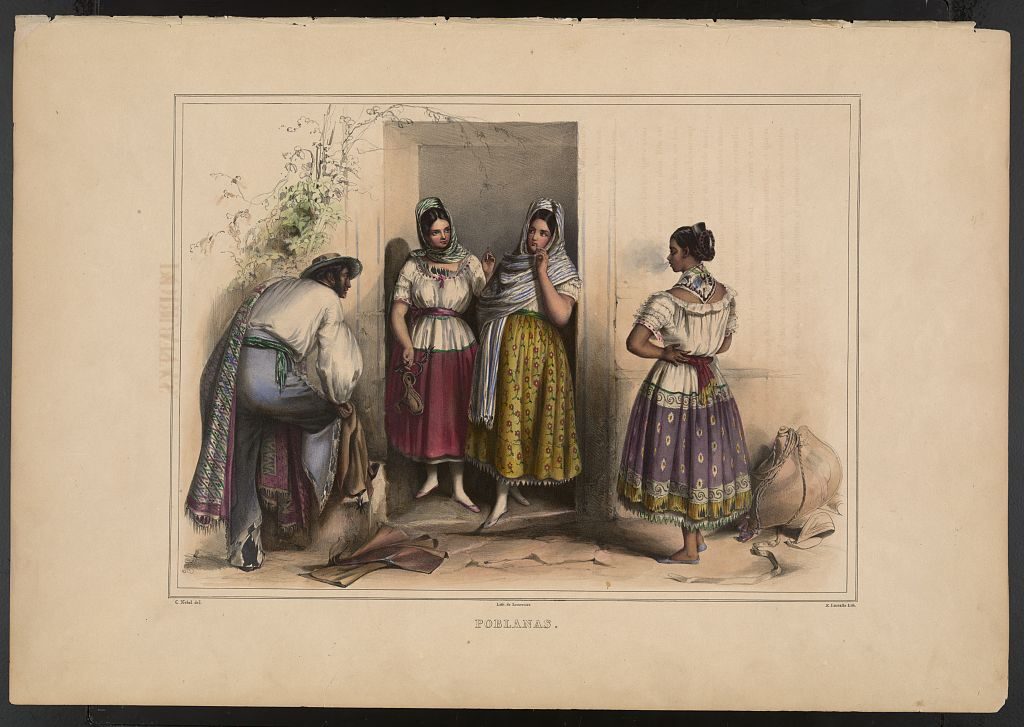
A rebozo is a long, rectangular shawl worn in Mexico. The Philadelphia Museum of Art states that the rebozo was used by all Mexicans during the colonial period, regardless of class and ethnic lines, and that rebozos were given to young women to mark occasions such as entering a convent.3 Mexico News Daily describes it as a nationally iconic garment that once served for modesty and for carrying babies and goods.1

Materials and Decoration
A cotton rebozo in the Victoria and Albert Museum, dated 1875 to 1890 and probably made in Mexico, is a warp-faced plain weave with warp ikat stripes in indigo blue and white and a knotted warp fringe at both ends; it measures 2,410 by 775 millimeters. The museum calls the resist-dyed warp pattern jaspe and notes that such shawls were woven commercially on treadle looms and sold in village markets.2 Mexico News Daily states that the Spanish brought ikat to Mexico from Asia and that the finest rebozos are still made on backstrap looms.1 A late 18th-century rebozo in Philadelphia is embroidered with clergy, Indigenous women, and Creole and Spanish elites at leisure.3
Origins and History
Mexico News Daily places some of the finest rebozos in Santa María del Río, San Luis Potosí, a town established in 1589, and reports that silk rebozos were favored by wealthy women in the city of San Luis Potosí during the colonial period.1
The Term Today
Mexico News Daily states that most rebozos today are shorter than those made in the past and are worn mainly as fashion accessories.1
On This Site
- Early modern Americas clothing
- 19th century Americas clothing
- Modern American clothing
- Aztec clothing: Mexica dress, textiles, and tribute cloth
Sources
- How Asia came to influence the design of Mexico's iconic rebozo — Leigh Thelmadatter, Mexico News Daily, 23 April 2022 (form, uses, ikat from Asia, backstrap looms, Santa María del Río, silk rebozos, and present-day use).
- Rebozo, T.21-1931 — Victoria and Albert Museum, 1875–1890, probably Mexico (cotton warp ikat, jaspe, dimensions, fringe, and treadle-loom commercial production; record retrieved through the V&A collections API).Reference 1
- Shawl (Rebozo) — Philadelphia Museum of Art, late 18th century (use across classes in the colonial period, gifts to young women, and embroidered figures).