China: Ming and Qing Dynasties
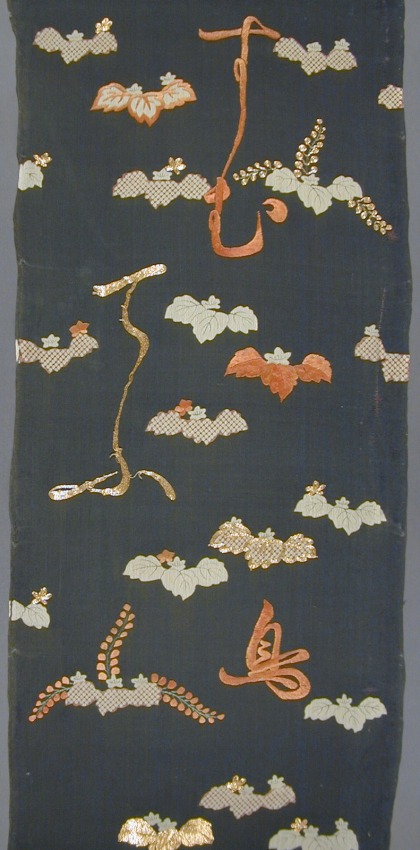
The Ming dynasty (1368–1644) restored Han Chinese clothing traditions after nearly a century of Mongol rule. Court dress centered on the dragon robe, an elaborately embroidered silk garment reserved for the emperor and high officials, featuring five-clawed dragons amid clouds and waves. Scholar-officials wore the round-collared robe with rank badges — embroidered squares on the chest and back depicting birds for civil officials and beasts for military ones. Women of the court wore flowing ao jackets over long qun skirts, with hair arranged in elaborate styles adorned with gold and jade ornaments.
The Manchu conquest of 1644 imposed dramatic changes on Chinese dress. The Qing dynasty mandated the changshan (a long, side-fastening robe) and the magua (a riding jacket) for men, along with the queue hairstyle. Women's dress gradually evolved into the qipao precursor, a looser Manchu-style robe. The Twelve Symbols of imperial authority — sun, moon, stars, mountains, and eight other motifs — continued to adorn the emperor's ceremonial garments, maintaining an unbroken link to ancient Chinese cosmology even under Manchu rule.
Japan and Korea
Edo-period Japan (1603–1868) saw the kimono reach its peak of artistic refinement under the Tokugawa shoguns. Strict sumptuary laws regulated fabric, color, and pattern by social class: samurai wore subdued silk robes with family crests (mon), while wealthy merchants, barred from wearing silk, developed extraordinarily fine cotton and linen garments with elaborate resist-dyeing techniques like shibori and yuzen. The obi, originally a simple sash, grew into a wide, ornamental belt that became a focal point of women's dress.
In Joseon-era Korea (1392–1897), the hanbok was formalized into a highly standardized national costume. Men wore a jeogori (short jacket) over baji (wide-legged trousers) with a long durumagi overcoat, topped by distinctive tall-crowned gat hats made of horsehair and bamboo. Women's hanbok featured a dramatically short jeogori paired with a high-waisted chima (skirt) that created a graceful, bell-shaped silhouette. White ramie and cotton cloth predominated in daily life, while brightly colored silks were reserved for ceremonies, weddings, and the court.
Textiles, Accessories, and the Art of Dress
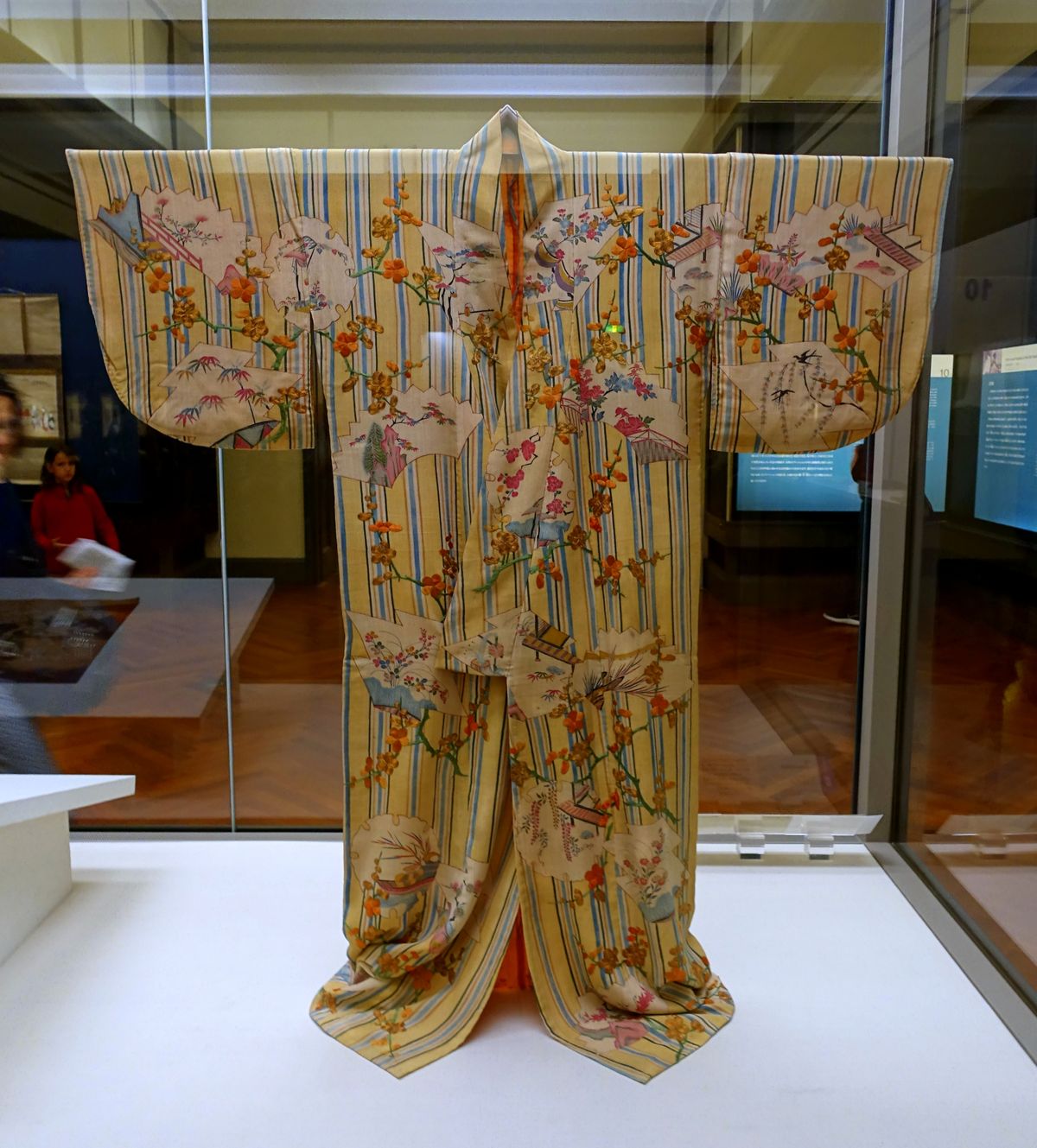 Tokyo National Museum. Wikimedia Commons, CC0.

Across early modern East Asia, clothing was inseparable from the textile arts that produced it. Chinese silk brocades reached new heights of complexity under the Ming and Qing dynasties, with imperial workshops like the Jiangning Weaving Department in Nanjing producing fabrics in intricate patterns of dragons, phoenixes, and auspicious symbols. The Suzhou embroidery tradition became particularly renowned, with skilled artisans splitting silk threads into as many as sixteen thinner strands to create pictorial works so fine they resembled paintings. Accessories carried equal weight — jade belt plaques, silk fans, and embroidered pouches were essential components of a complete outfit, and their quality and design communicated the wearer's taste and status as clearly as the garment itself.
In Japan, the textile arts became a primary vehicle for artistic expression. Yuzen dyeing, developed in Kyoto in the late 17th century, allowed artisans to paint elaborate pictorial scenes directly onto silk using rice-paste resist techniques, transforming the kimono into a wearable canvas. Shibori tie-dyeing produced patterns ranging from simple dots to elaborate geometric and abstract designs, while kasuri (ikat weaving) created geometric patterns by pre-dyeing warp or weft threads. Korean artisans excelled in jogakbo, the art of piecing together scraps of silk and ramie into wrapping cloths with compositions that anticipated modern abstract art. These textile traditions elevated everyday garments into objects of extraordinary beauty and technical achievement.