Inca clothing was the dress of the Andean empire that rose around 1400 and fell to Spanish invaders in the early 1530s.1 Men wore a tunic called an unku, woven as one piece of cloth, folded, and sewn up the sides, with a cloak or poncho on top in cold weather.3,5,9 Women wore a large wrap dress, the aksu, held at the waist by a sash called a chumpi, with a shoulder mantle, the lliclla, on top.5,6,7 The fibers were camelid wool from the highlands and cotton from the coast and the eastern lowlands.5 Cloth was also a prized gift, a tax, and a mark of rank.4,5
What Survives, and How We Know
Many Inca textiles were burned or lost, but the dry Andean climate preserved many examples,5 and museums hold tunics, mantles, wrap dresses, and hats. The Los Angeles County Museum of Art, for example, holds a woman's wrap dress from 1450 to 1532, woven of undyed camelid fiber.7 The Textile Museum in Washington assembled nearly 50 elite and utilitarian textiles of the fifteenth and sixteenth centuries for its 2026 exhibition on the Inka world.9
The second body of evidence is written and drawn. Three colonial manuscripts of the late 1500s and early 1600s show hundreds of Inca men in tunics of different designs.1 The Andean chronicler Felipe Guaman Poma de Ayala drew ceremonies and elite women in enough detail that one surviving wrap dress can be compared with his pictures.8 Because these sources were made after the conquest, historians read them with care: they show how Andeans and Spaniards remembered Inca dress, not a direct record of it.
Men and Women
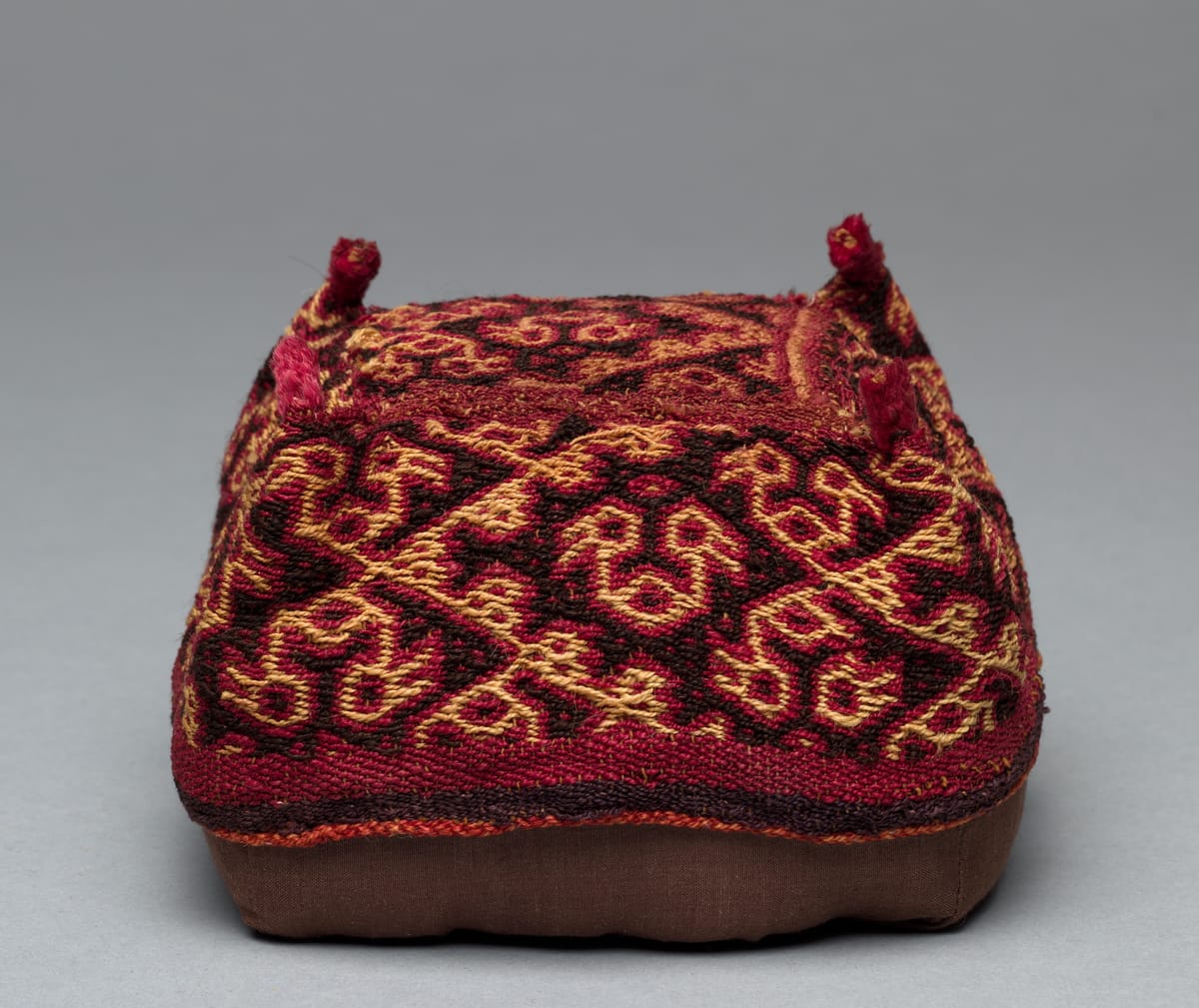
The basic men's garment was the unku. It was a single piece of cloth woven with a slit in the center for the head, then folded and sewn along the sides, with openings left for the arms.3,5 Garments were traditionally woven in a single piece where possible, because cutting the cloth after it came off the loom was thought to destroy its spirit existence.3 Over the tunic a man could wear a cloak or poncho.5 Both men and women wore cloth hats or headbands.5 The Cleveland Museum of Art holds a four-cornered camelid-fiber hat from the Ica Valley.13
Women wore one large cloth wrapped around the body and pinned at the shoulder, held in place by the chumpi sash.5 The LACMA wrap dress shows the scale of the garment: it measures about 98 by 66 inches.7 Over it, a woman wore the lliclla on her shoulders.6 Clothing elements such as materials, colors, and motifs identified a person's region and social status, and many Andeans were dressed to show their affiliation with the state.9
Elite and Commoner Cloth
The Inca ranked cloth by quality. The most common grade, awasca, was used for daily wear and for the army, and it was rarely decorated.5 The finest grade was cumbi (also spelled qompi), a tapestry weave that was highly valued and made by specialists.5,6 Finely woven interlocked tapestry garments were a privilege of the nobility.4
Fine cloth came from several kinds of weavers. The Cleveland Museum of Art names women of noble families, professional weavers, and the acllas, or chosen women.4 The acllas were collected from across the empire and lived cloistered in buildings, where they wove fine cloth and brewed beer for the state.3,4 The finest weavers were forcibly moved to the capital.5 The fiber they used was collected through the Inca tax system.3
The difference between elite and ordinary cloth was not only a matter of decoration. In one tunic at Dumbarton Oaks, likely a royal garment, the threads number about 100 per centimeter.3
Cloth as Tribute, Gift, and Offering
Textiles were part of the Inca economy. The state often required conquered peoples to produce cloth as tribute or tax.5 Cloth woven by the acllas was then given out as royal gifts or worn by the royal household, and some was burned as a sacrifice.3 The Cleveland Museum of Art notes that the state redistributed fine tapestry garments as prized gifts to loyal vassals and allies.4 Textiles were also given as gifts at weddings, births, and rites of passage.5
Cloth also had a sacred side. Garments that had touched the emperor's body were ritually burned, either in an annual ceremony or in a funeral rite called the Purucaya.1 When the Spanish arrived, the welcome gifts they received were textiles, not metal goods.5
Fabrics, Fibers, and Dyes
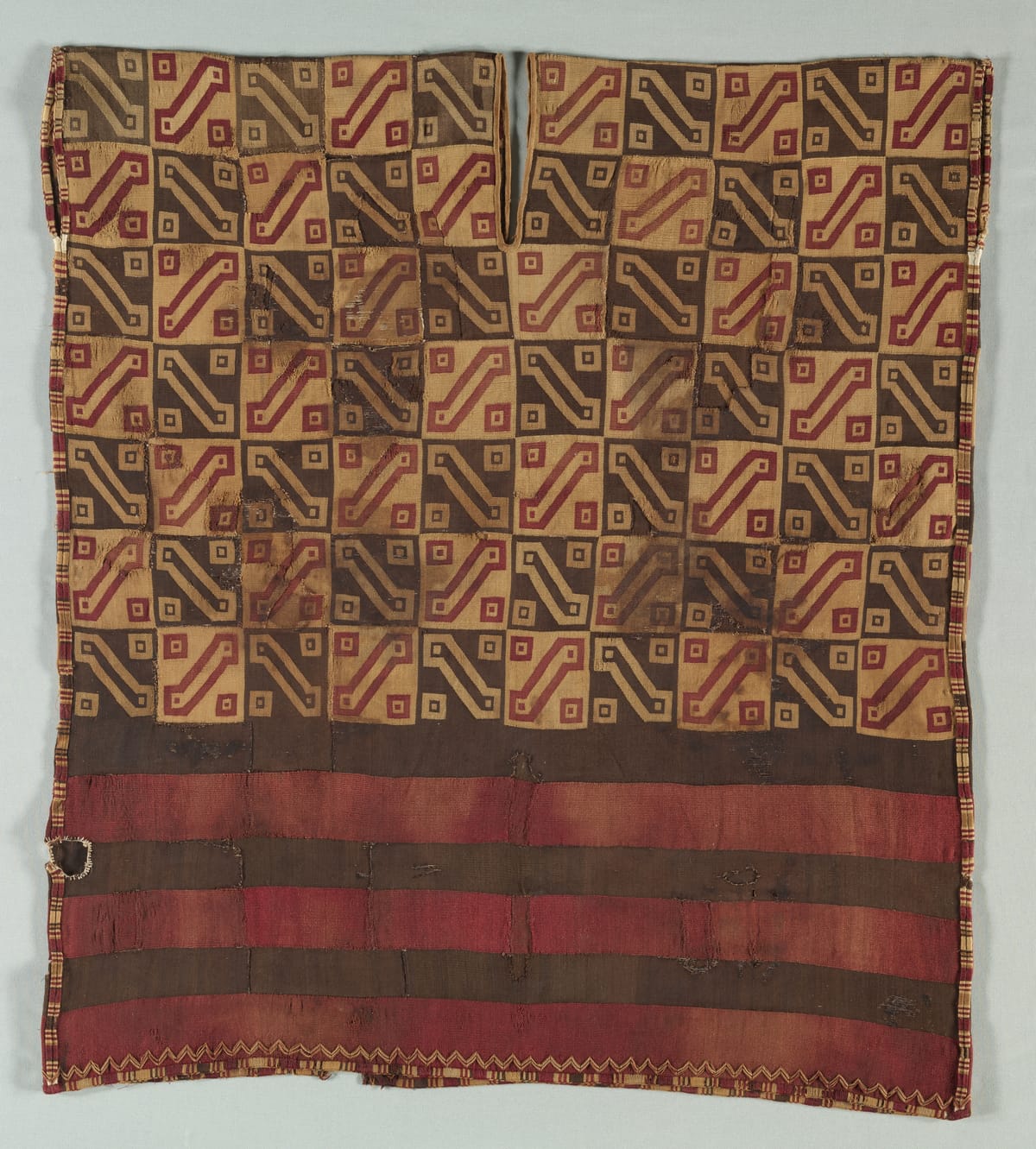
Inca weavers worked with two main fibers. Cotton was grown on the coast and in the eastern lowlands, and wool from the llama, alpaca, and vicuña was more common in the highlands.5 Dyed camelid wool combined with cotton was a common pairing for high-status textiles,3 and the Cleveland key-pattern tunic is tapestry of cotton and camelid fiber.4
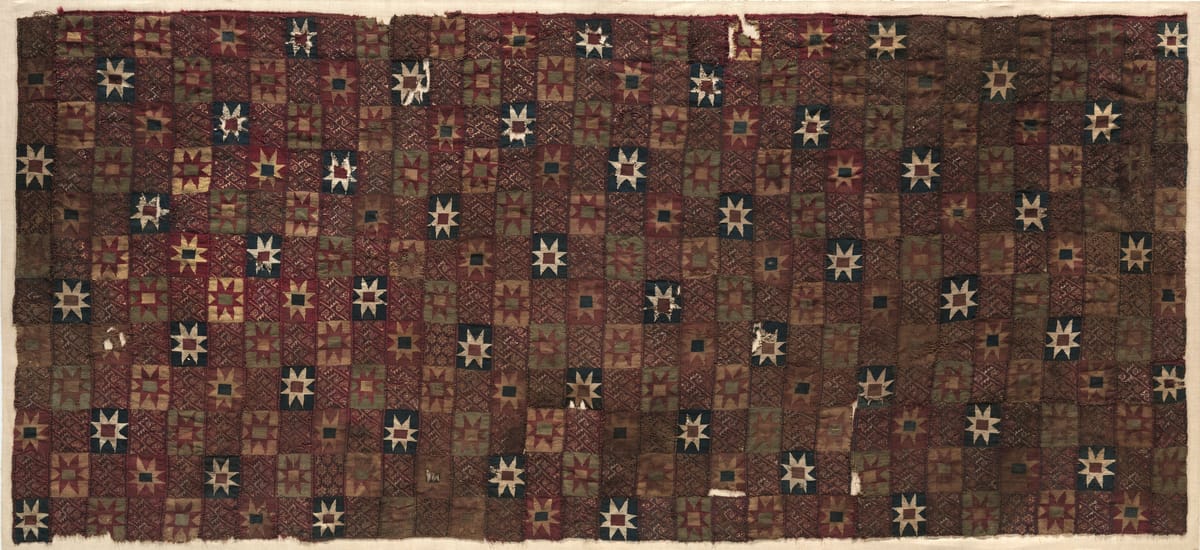
The colors came from natural dyes extracted from plants, minerals, insects, and mollusks.5 A fragmentary mantle in Cleveland, probably from the Ica Valley on the south coast, combines several techniques in one cloth: tapestry, fancy twill, and brocade.14
Dress Rules and the Royal Tunic
The clearest dress rule in the Inca world concerned tocapu, the small square designs woven into elite garments. In Inca times these designs were allowed only for the Inca king and those to whom he gave tocapu garments as gifts.6 Only the Sapa Inca, or emperor, could grant permission to wear them.10 Only weavers working for the Inca government were reportedly allowed to make tocapu.1
The most famous example is the all-tocapu tunic at Dumbarton Oaks in Washington, D.C. It measures 90.2 by 77.15 centimeters, and a tunic covered with this many tocapu likely belonged to the Inca ruler.3 It holds the greatest quantity of tocapu of any surviving Inca artifact.1 Colonial manuscripts show only Inca emperors wearing an all-tocapu tunic, and only on special occasions such as coronations, royal weddings, and political summits.1
Robert Woods Bliss, the cofounder of Dumbarton Oaks, bought the tunic for his own collection, and it joined the institution's holdings in 1963.2 In his 2024 study, Andrew James Hamilton argued that a zigzag line meant to be embroidered along the lower edge was begun and then abruptly stopped.1 He suggests the tunic was being made as new clothes for Atahualpa, the last Inca emperor, and was left unfinished when the Spanish killed him in 1533.1 Hamilton also found one side more precise than the other and concluded that a pair of weavers, a master and a student, likely made it.2
Myths About Inca Clothing
Myth: tocapu were a written script. For decades, researchers believed the symbols on the royal tunic formed a written language.1,2 There is evidence that the Inca did not write.2 The question is not fully closed, but tocapu are best described as signs of rank, not as text that can be read.
Myth: Inca weaving ended with the conquest. Former Inca-trained weavers went on making high-quality textiles for new purposes in colonial times.6 The Art Institute of Chicago holds pieces of a colonial tunic from 1550 to 1625 with five rows of tocapu at the waist.10 The Inca sumptuary laws were later ignored, and tocapu clothing became a way for Indigenous elites to show their wealth.10
After the Conquest: Colonial Andean Dress
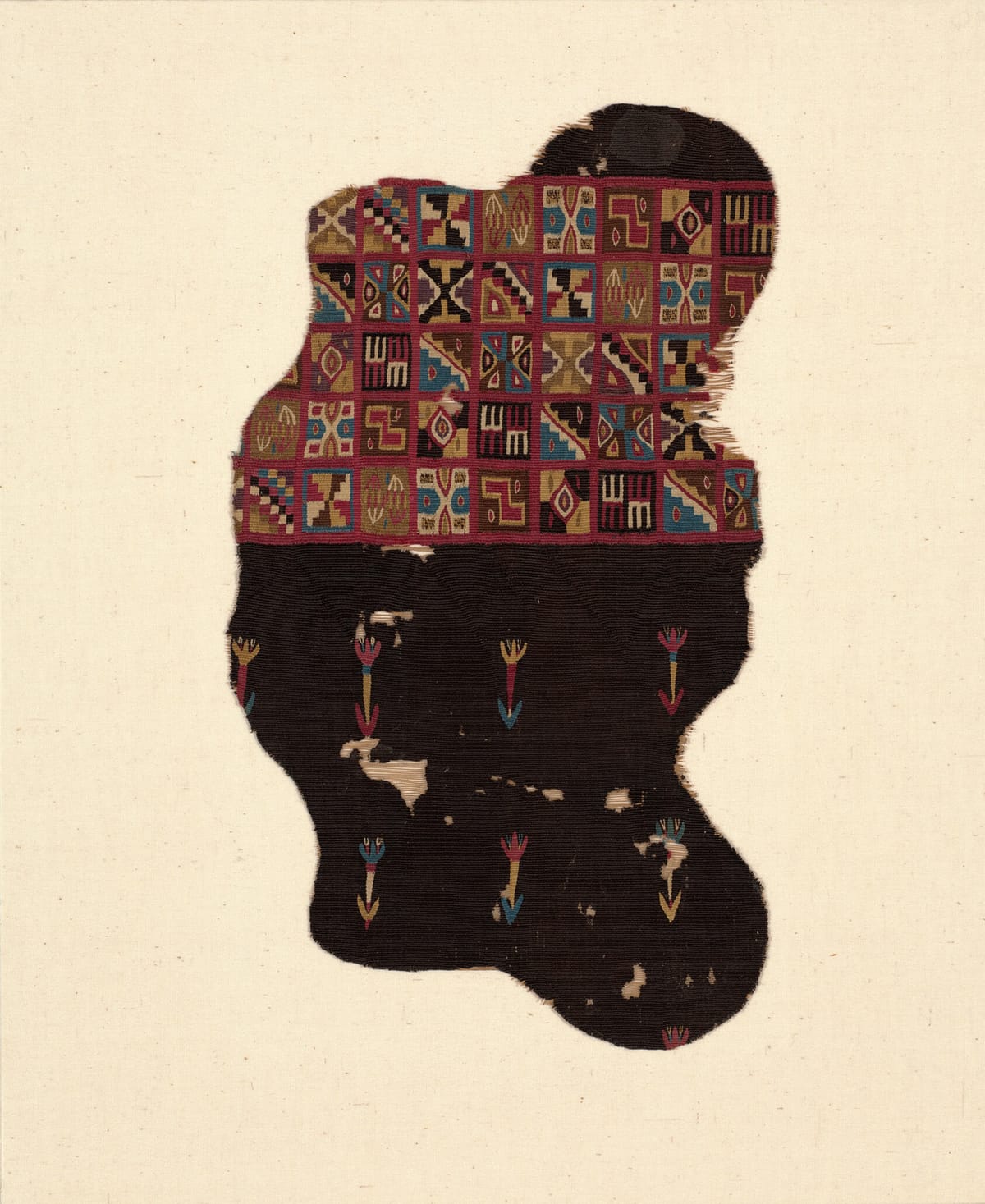
Colonial unku kept the Inca structure but changed the details. A sixteenth-century half tunic in Cleveland has the standard tocapu waistband and deep V-shaped yoke, but its fantastic animals and floral motifs show that it was woven after the Spanish conquest of 1532.12 The Chicago fragments show cantuta flowers on the shoulder and cascades of rectangles in the yoke, a design invented in the colonial period.11 A faint diagonal line in the red threads shows that the cloth was woven in sections, a time-saving method used after the strict Inca rules for making textiles had faded.11
Women's dress also continued. The Cooper Hewitt holds a lliclla from Peru, dated to the sixteenth or seventeenth century and made in cumbi tapestry with tocapu, a design that in Inca times only the king and those he favored with gifts could use.6 Shelley Burian notes that the features of one rare tapestry aksu at The Textile Museum make it hard to date, and she titles it only a possible Inka piece.8 For the wider picture of dress in the region before the Inca, see medieval Andean and Mesoamerican clothing.
Quick Answers
What did the Inca wear?
Inca men wore a tunic called an unku, made from one piece of cloth folded and sewn at the sides, with a cloak or poncho on top.3,5 Women wore a large wrap dress, the aksu, belted with a chumpi sash, and a shoulder mantle called a lliclla.5,6,7
What were Inca clothes made of?
They were made of camelid wool from the llama, alpaca, and vicuña, and of cotton grown on the coast and in the eastern lowlands.5 Fine tunics often combined the two.3,4
What is a tocapu?
A tocapu is a small square design woven into fine Inca cloth. In Inca times these designs were allowed only for the Inca king and those to whom he gave tocapu garments.6 The tunic at Dumbarton Oaks has more tocapu than any other surviving Inca object.1
Who made Inca textiles?
Women of all classes were expected to be skilled weavers, and the state required cloth as tribute or tax from conquered peoples.5 Fine tapestry cloth was made by women of noble families, professional weavers, and the acllas, chosen women who lived cloistered and wove for the state.4
Sources
- The Inca Emperor's New Clothes — Andrew James Hamilton, ReVista: Harvard Review of Latin America, David Rockefeller Center for Latin American Studies, Harvard University, 2024.
- The Mystery Behind an Incan Tunic — Max J. Krupnick, Harvard Magazine, July–August 2024.
- All-T'oqapu Tunic — Sarahh Scher, Smarthistory (via LibreTexts), 2015.
- Tunic (1957.136) — Inca, Cleveland Museum of Art.
- Inca Textiles — Mark Cartwright, World History Encyclopedia, 2015.
- Andean Woman's Mantle — Cooper Hewitt, Smithsonian Design Museum, 2012 (object 1902-1-782).
- Woman's Wrap Dress (Acsu) — Inka, Los Angeles County Museum of Art, M.2003.78.
- An Examination of an Inka(?) Aksu in the Collections of The Textile Museum — Shelley Burian, in IX Jornadas Internacionales de Textiles Precolombinos y Amerindianos, Zea Books, Lincoln, Nebraska, 2024.
- Inka Influence and Diversity on Display in "Weaving an Empire: Textiles of the Inka World" — The George Washington University Museum and The Textile Museum, 2026.
- Fragment from the Topacu Waistband of a Tunic (Uncu) — Art Institute of Chicago.
- Fragment from the Shoulder of a Tunic (Uncu) — Art Institute of Chicago.
- Half Tunic (1951.393) — Inca culture, Colonial Period, Cleveland Museum of Art.
- Four-Cornered Hat (1949.192) — Inca culture, Cleveland Museum of Art.
- Fragmentary Mantle (1940.497) — Inca culture, Cleveland Museum of Art.