Chola and Southern Kingdoms (9th–13th Century)
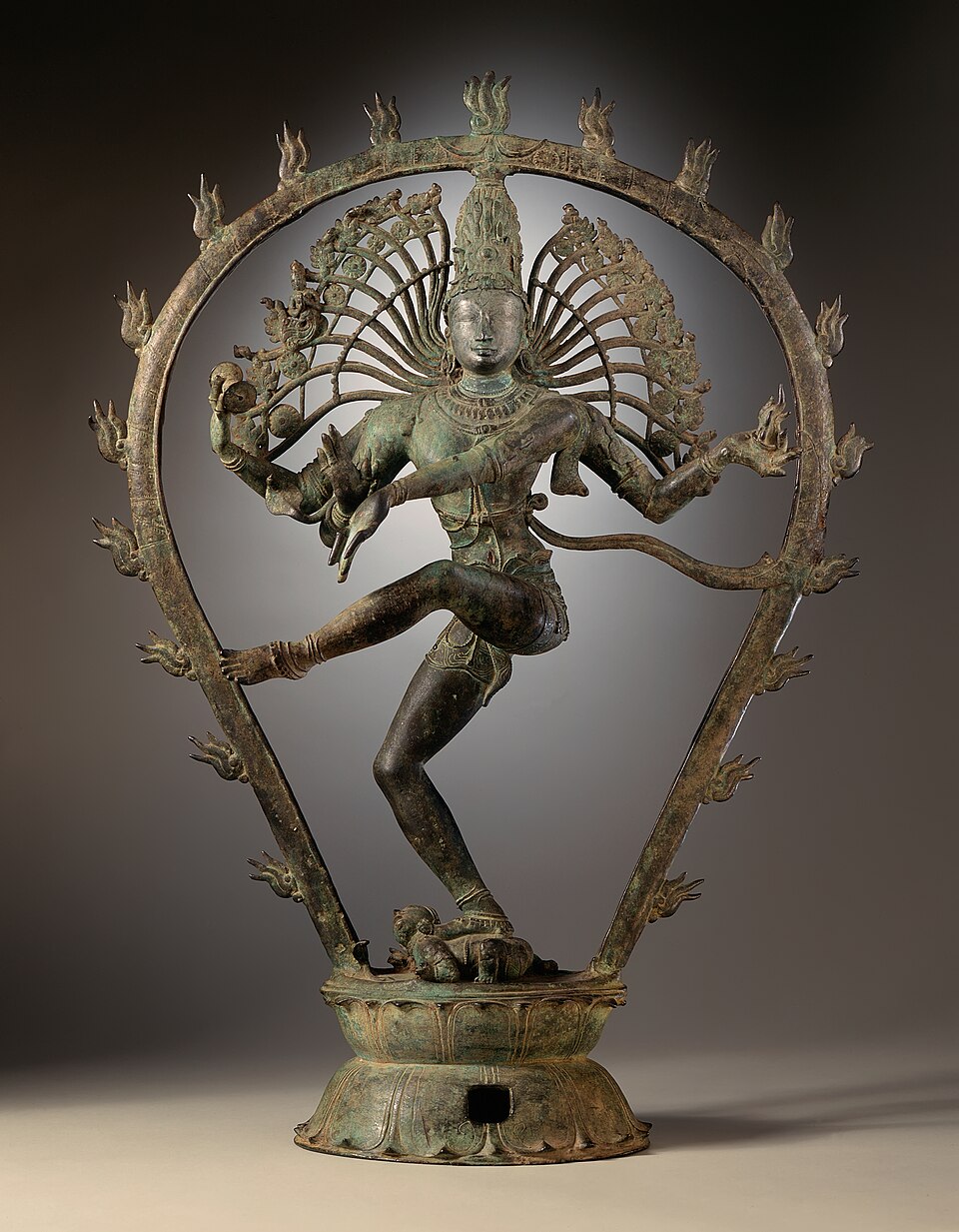
The Chola dynasty (9th–13th century) presided over a flourishing of textile arts in southern India. Temple sculptures and bronzes from this period reveal men and women wearing finely draped unstitched garments — lengths of cotton or silk wrapped, pleated, and tucked with remarkable precision. Women typically wore a long cloth draped as a lower garment with a separate breast cloth, while men wore the dhoti, a single length of fabric wrapped around the waist and legs in various styles that signaled caste and occasion.
South Indian weavers became renowned for their mastery of cotton, producing cloth of exceptional fineness; writing shortly after the Chola period, Marco Polo described cottons from the Coromandel coast as resembling spider's web. Their most consequential skill, though, was fixing color to cotton with metallic salts so that it survived washing — a problem most of the world had not solved. The patola silk — a double-ikat weave requiring extraordinary skill — originated in Gujarat and became a prized trade cloth across Southeast Asia. Dyeing techniques using indigo, turmeric, and lac produced vibrant, colorfast textiles. The trade networks of the Chola maritime empire carried these fabrics to ports throughout the Indian Ocean, making South Asian textiles a form of currency and diplomatic gift.
For a fuller account of dress, ornament, and the temple weaving economy under the Cholas, see Chola dynasty clothing and textiles.
Delhi Sultanate and Early Mughal Influence (13th–16th Century)
The establishment of the Delhi Sultanate in 1206 introduced Central Asian and Persian clothing traditions to northern India. The new ruling class wore tailored and stitched garments — a stark contrast to the draped styles of earlier periods. The jama, a long fitted coat with a flared skirt tied to one side, became standard elite menswear. Women adopted the peshwaz, a long gown with a fitted bodice, sometimes worn over trousers. Head coverings, including turbans for men and odhni (light veils) for women, gained new prominence under Islamic cultural influence.
Despite these changes at the court level, the majority of South Asia's population continued to wear unstitched draped garments. What emerged was a distinctive synthesis: urban and courtly fashion increasingly blended Persianate tailoring with Indian textiles, while village weavers maintained ancient traditions of muslin, khadi, and regional handloom cloth. The textile workshops, or karkhanas, established by the sultans organized weavers into specialized guilds, producing luxury fabrics including zari-embroidered cloth woven with gold and silver threads that would reach its fullest expression under the later Mughals.
Textile Techniques and the Indian Ocean Trade
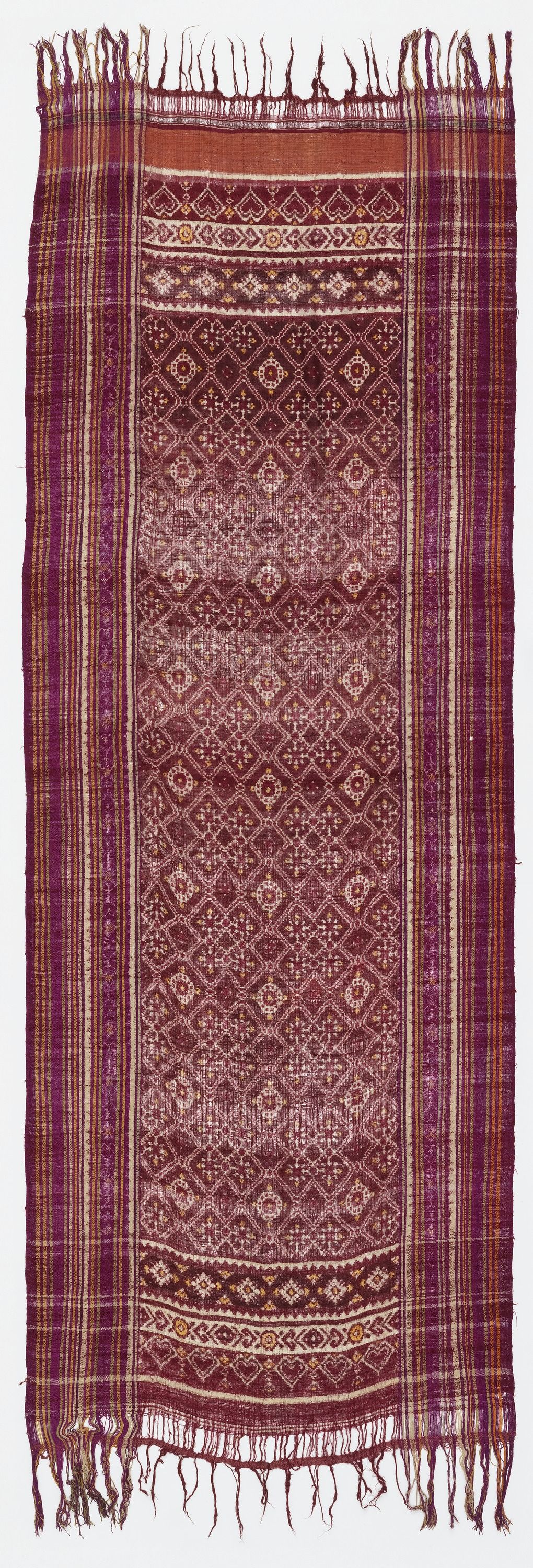 Cooper Hewitt, Smithsonian Design Museum. Wikimedia Commons, Public Domain.
,_19th_century_(CH_18437535).jpg)
Medieval South Asian weavers developed a repertoire of techniques that remained unmatched anywhere in the world. Ikat weaving — in which yarns are resist-dyed before being placed on the loom — reached its highest expression in the patola silks of Gujarat, where both warp and weft threads were precisely dyed to create intricate geometric, floral, and figurative patterns. This double ikat technique required extraordinary planning and skill, as the dyer had to calculate exactly where each color would fall in the finished cloth. Patola textiles became prized status symbols across Southeast Asia, where local elites sought them as markers of wealth and rank.
Block printing — in which carved wooden blocks were used to stamp patterns onto cloth — and mordant dyeing — in which fabrics were treated with chemical fixatives before being dipped in dye baths to produce vibrant, colorfast hues — allowed South Asian artisans to produce richly colored cotton textiles in vast quantities for export. The kalamkari tradition of the Coromandel Coast produced elaborate narrative textiles depicting Hindu mythological scenes, painted freehand with a bamboo pen. These cotton fabrics circulated through the Indian Ocean trade network from East Africa to Indonesia, shaping dress cultures across the maritime world and establishing South Asia as the medieval period's undisputed center of global textile production.