West African Textiles and the Trans-Saharan Trade
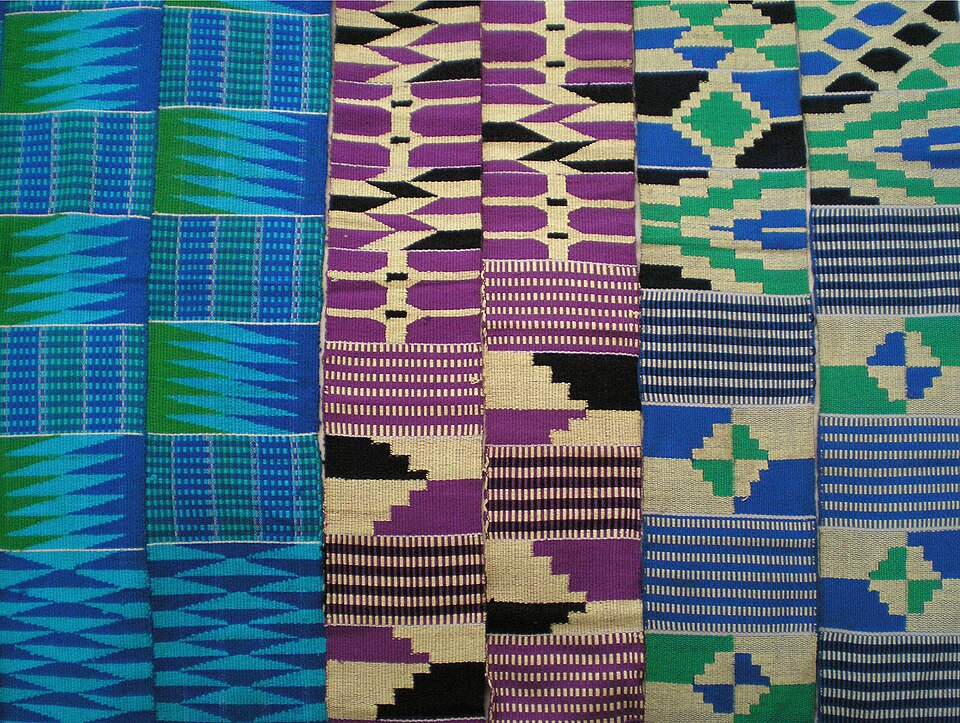
Medieval West Africa was home to some of the continent's most accomplished weaving traditions. The ancestors of the Akan peoples in present-day Ghana developed kente cloth, a brilliantly colored fabric woven on narrow strip looms and assembled into larger garments. Each kente pattern carried specific meanings — particular color combinations and geometric designs communicated proverbs, social status, and clan identity. The narrow-strip weaving technique, in which long bands of cloth are sewn edge to edge, was widespread across the West African savanna and represents a distinctly African approach to textile construction.
The trans-Saharan trade routes that connected West Africa to North Africa and the Mediterranean profoundly shaped the region's textile culture. Camel caravans carried indigo-dyed cloth northward and brought Mediterranean and Middle Eastern fabrics south. Cities like Timbuktu, Djenné, and Kano became major centers of textile production and commerce. West African indigo dyeing, using the leaves of local plants in deep fermentation vats, produced cloth of such intense blue-black color that it became a signature export. The Hausa weavers of what is now northern Nigeria produced elaborately embroidered robes called babban riga that served as prestige garments and trade goods across the Sahel.
Eastern and Southern Africa
In eastern Africa, the Swahili coast's position as a hub of Indian Ocean trade brought an influx of imported textiles that mingled with local traditions. Arab and Indian merchants arriving at ports like Kilwa, Mombasa, and Mogadishu traded cotton cloth, silk, and beads for gold, ivory, and local goods. Swahili elites wore kanga-like draped cotton garments alongside imported fabrics, creating a cosmopolitan dress culture that reflected the coast's role as a meeting point between African, Arab, and Indian worlds.
Further south, the civilization centered on Great Zimbabwe (11th–15th century) left evidence of sophisticated textile production. Archaeological finds include spindle whorls indicating local cotton spinning, and the kingdom's extensive trade connections — reaching to the Swahili coast and beyond — ensured access to a variety of fabrics. Throughout Sub-Saharan Africa, bark cloth (made by beating the inner bark of certain trees into a supple fabric) remained an important textile in regions where woven cloth was scarce. In the Kingdom of Buganda and other Great Lakes societies, bark cloth production reached a high art, with the finest examples reserved for royalty and used in ceremonial contexts.
Dress, Adornment, and Social Identity
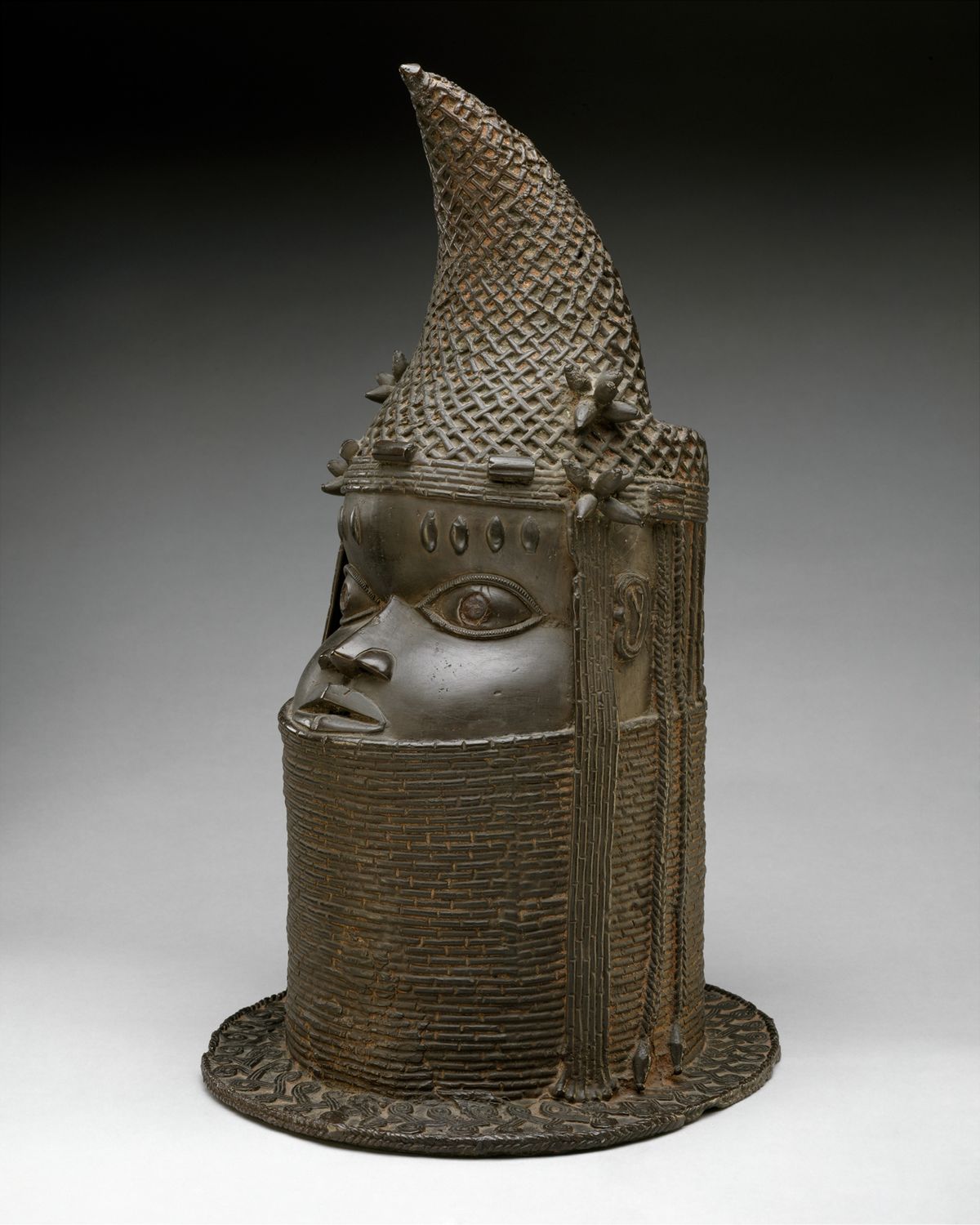 Metropolitan Museum of Art. Wikimedia Commons, CC0.

Across medieval Sub-Saharan Africa, clothing functioned as a sophisticated language of social identity. In the kingdoms of the West African forest belt, draped wrappers — lengths of cloth wound around the body — served as the basic garment for both men and women, with the quality of fabric, the style of wrapping, and the addition of accessories communicating rank, occupation, and ritual status. Chiefs and rulers distinguished themselves through exclusive access to certain materials: among the Akan, silk and gold-threaded cloth were royal prerogatives, while in Benin, coral beads and specific patterns of woven cloth were controlled by the Oba's court.
Body modification and adornment complemented textile clothing throughout the region. Scarification patterns marked ethnic identity and life stages, while elaborate hairstyling — often incorporating beads, cowrie shells, and metal ornaments — served as a form of portable art and social marker. In the Sahara, indigo-dyed garments were worn so consistently that the dye transferred to the wearer's skin, earning the Tuareg the name "blue people." Across the Great Lakes region, bark cloth garments were decorated with painted or stamped patterns for ceremonial occasions. The integration of textiles, body art, jewelry, and hairstyling into a unified system of dress represents one of Africa's most distinctive contributions to the global history of clothing.