Tang and Song Dynasty China (618–1279 CE)
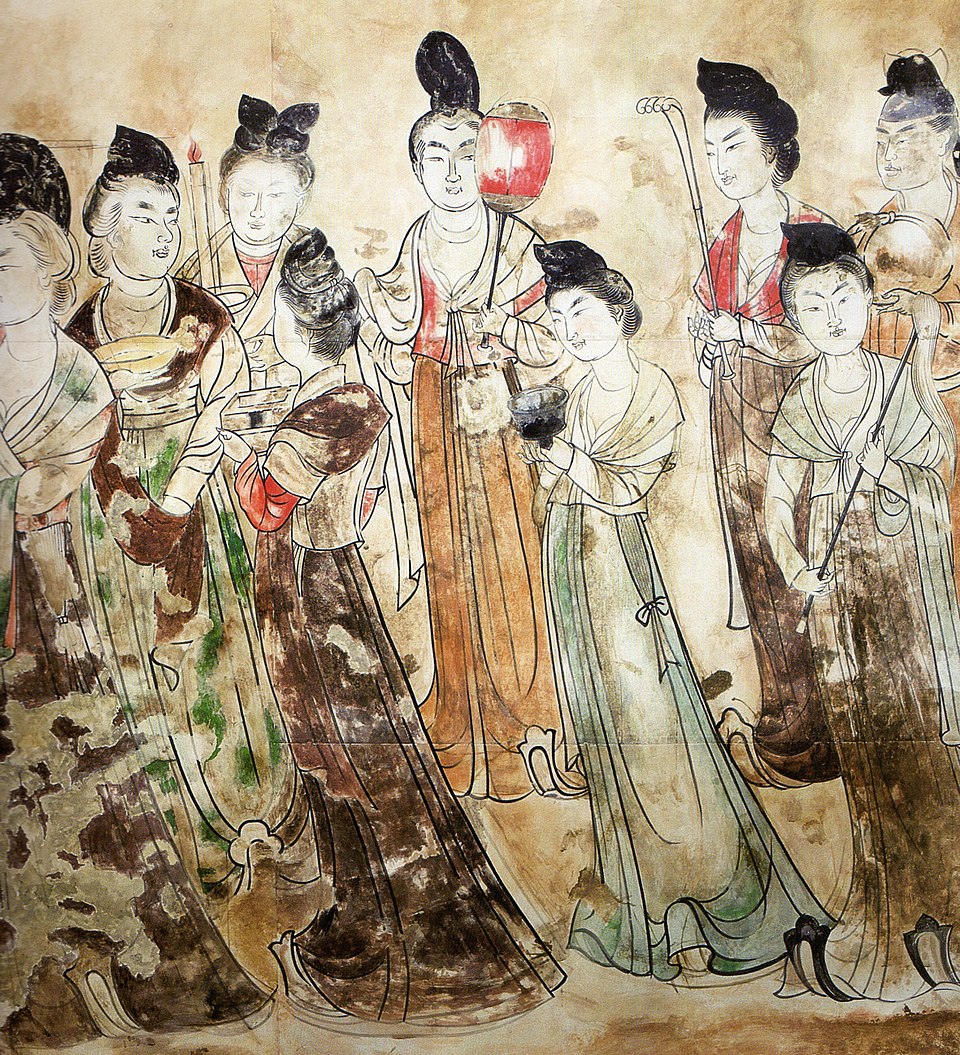
The Tang dynasty (618–907 CE) represented a golden age of Chinese fashion, marked by cosmopolitan openness and extravagant court dress. Women of the Tang court wore ruqun — a blouse tucked into a high-waisted skirt — often paired with sheer silk shawls called pibo that draped over the shoulders. Fabrics ranged from lightweight gauze to richly patterned brocades, and bold colors like vermilion, emerald, and gold were favored. Foreign influences from Central Asia introduced narrow-sleeved robes, riding outfits, and new textile patterns featuring Persian and Sogdian motifs.
The Song dynasty (960–1279 CE) shifted toward a more restrained aesthetic. Court and scholarly dress emphasized elegance through simplicity, with muted colors and refined tailoring replacing Tang exuberance. The beizi, a long open-fronted coat, became a defining garment for both men and women. Song-era advances in silk weaving — particularly kesi (cut silk tapestry) — produced textiles of extraordinary intricacy, with pictorial designs that blurred the line between fabric and painting.
The Kimono and the Hanbok
Japanese clothing underwent a profound transformation during the medieval period. The layered court robes of the Heian era gradually gave way to the kosode, a smaller-sleeved garment that had originally served as an undergarment. By the Kamakura period (1185–1333), the kosode had become outerwear for both commoners and warriors, forming the foundation of what would eventually be called the kimono. Samurai dress introduced practical innovations such as the hitatare, a two-piece outfit with a wide-sleeved jacket and trousers, suitable for both formal occasions and movement.
In Korea, the Goryeo dynasty (918–1392) developed a distinctive dress tradition that balanced Chinese influence with indigenous style. The hanbok — comprising a short jacket called a jeogori and a high-waisted wraparound skirt (chima) for women, or wide trousers (baji) for men — emerged as the defining Korean silhouette during this era. Goryeo textiles were renowned for their quality; Korean silk and ramie were prized trade goods, and the kingdom's weavers produced delicate fabrics that drew admiration from Chinese and Japanese observers alike.