Mesoamerican Textiles: Maya and Aztec
The textile arts of Mesoamerica reached extraordinary heights during the Postclassic period (900–1521 CE). Among the Aztec (Mexica), clothing was rigorously regulated by sumptuary laws: commoners wore simple garments of maguey (agave) fiber, while nobles dressed in fine cotton. The basic male garment was the tilmatli, a rectangular mantle knotted over one shoulder, with the quality of its decoration marking the wearer's rank. Warriors who captured enemies in battle earned the right to wear increasingly elaborate tilmatli designs, and the most distinguished fighters received cloaks decorated with featherwork — mosaics of tropical bird feathers painstakingly sewn onto a fabric backing.
Featherwork (amantecayotl) was one of the most prestigious artistic traditions in Mesoamerica. Specialist artisans called amanteca created dazzling cloaks, headdresses, shields, and fans using feathers from birds such as the quetzal, macaw, cotinga, and roseate spoonbill. The iridescent green feathers of the quetzal were particularly sacred and reserved for the highest-ranking individuals. Women's dress centered on the huipil, a sleeveless tunic woven on a backstrap loom, often with elaborate brocaded or embroidered designs. The backstrap loom itself — portable, efficient, and capable of producing incredibly fine cloth — was the primary weaving technology across Mesoamerica and remains in use today.
Andean Textiles: Wari, Chimú, and Inca
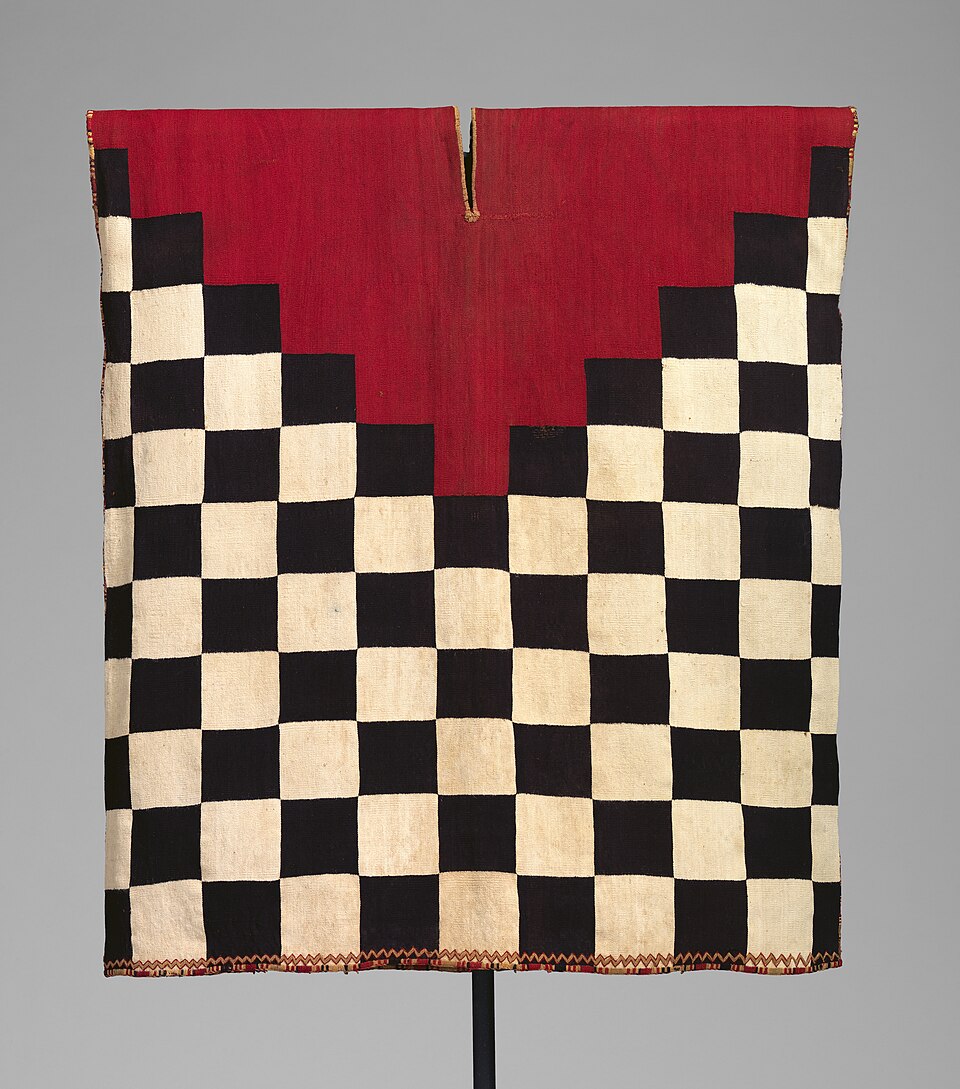
The Andean region produced what many scholars consider the most technically accomplished textiles of the pre-industrial world. The Wari empire (600–1000 CE) established a tradition of large-scale textile production featuring complex tapestry weave tunics with bold geometric and iconographic designs. The subsequent Chimú kingdom continued this legacy, producing gossamer-fine cotton gauzes and elaborately painted fabrics along Peru's northern coast.
The Inca empire (1438–1533) elevated textile production to a matter of state. Cloth was the most valued commodity in the Inca world — more precious than gold or silver. The finest textiles, called cumbi, were woven by acllas (chosen women) sequestered in special houses throughout the empire. Cumbi cloth featured impossibly tight weaves with thread counts exceeding 600 per inch and incorporated techniques including tapestry, supplementary weft, and discontinuous warp and weft that remain difficult to replicate even with modern technology. The Inca also used textiles for record-keeping: the quipu, a device of knotted colored strings, encoded numerical and possibly narrative information, making Andean cloth not merely a covering for the body but a medium of communication and governance.