Japan's Meiji Transformation
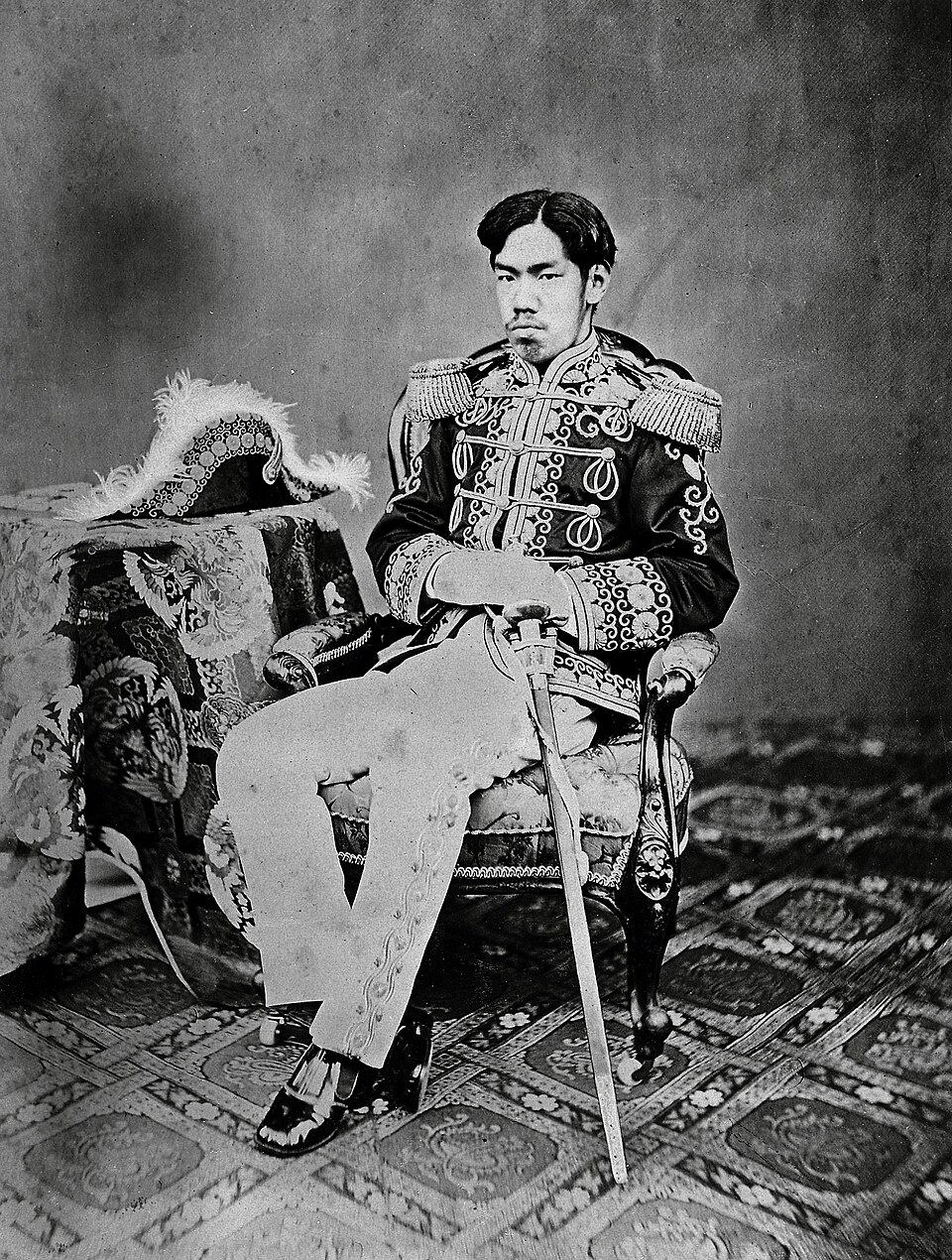
For most of the 19th century, Japanese dress followed Edo-period traditions. Men and women wore variations of the kimono, a T-shaped wrapped garment secured with an obi sash, with fabric patterns and layering conventions signaling season, status, and occasion. However, the Meiji Restoration of 1868 brought sweeping reforms that extended to clothing. The new government mandated Western-style military uniforms for its armed forces and encouraged officials to adopt Western dress as a symbol of modernization.
By the 1880s, Western clothing was required at court and in government offices, while the general population continued to wear traditional garments for daily life. This created a distinctive dual wardrobe system — yofuku (Western clothing) for public and professional settings and wafuku (Japanese clothing) for domestic and ceremonial use. The transition was neither smooth nor complete; it sparked fierce debates about cultural identity that continued well into the 20th century.
China and Korea in an Era of Change
In Qing dynasty China, the Manchu court dress system remained officially in force throughout the century. Officials wore dragon robes adorned with mandarin squares — embroidered badges indicating rank through specific bird or animal motifs. The flowing wide-sleeved robes of the Han Chinese majority coexisted with the tighter-fitting Manchu riding garments mandated by the ruling dynasty, including the changshan for men and the early form of the qipao for women.
On the Korean peninsula, the hanbok continued as everyday dress under the Joseon dynasty. Women wore the short jeogori jacket paired with the voluminous high-waisted chima skirt, while men wore wider jeogori with baji trousers. The Gabo Reforms of 1894 attempted to modernize Korean dress codes, simplifying court attire and permitting Western-style clothing for officials. As in Japan, these sartorial reforms reflected deeper tensions between preserving tradition and embracing change under external pressure.