The Sari and Traditional Dress Under Colonial Rule
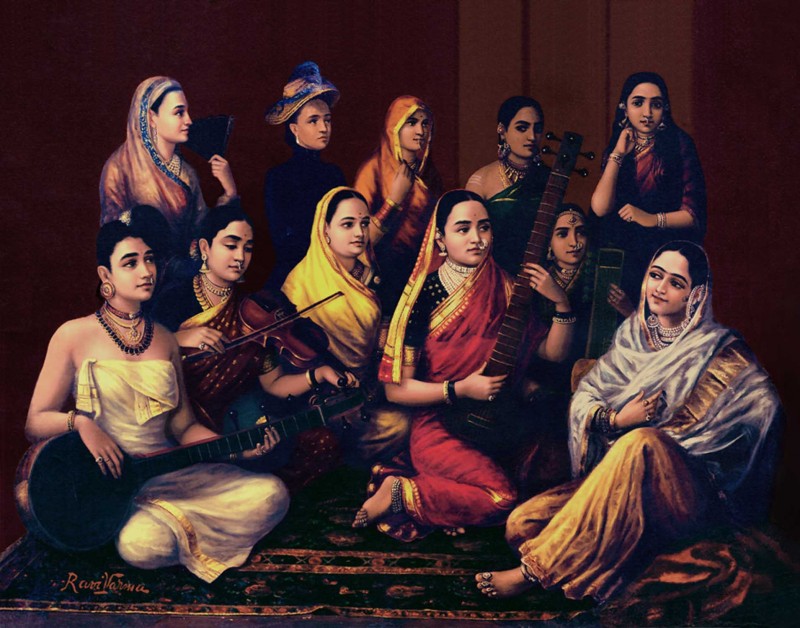
The sari remained the primary garment for women across much of South Asia throughout the 19th century, but its draping styles and the contexts in which it was worn shifted considerably. Regional variations flourished — the Nivi style from Andhra Pradesh, the Gujarati seedha pallu, and the Bengali aat poure each reflected local traditions. The six-to-nine-yard unstitched cloth was paired with a fitted choli blouse and a petticoat, a combination that became increasingly standardized during this period partly through colonial influence and the spread of printed fashion illustrations.
For men, the dhoti — an unstitched garment wrapped around the waist and legs — continued as everyday wear across much of the subcontinent. In northern India, the kurta paired with churidar or pajama trousers was common, while Mughal-influenced court dress persisted among the aristocracy. The sherwani, a long structured coat, emerged during this period as a formal garment blending Mughal tailoring traditions with British frock coat influences.
Textile Trade and the Seeds of Resistance
The 19th century was devastating for South Asian textile production. India had been one of the world's great textile exporters, renowned for its muslin, chintz, and calico fabrics. British colonial trade policies systematically redirected raw cotton to Manchester mills and flooded Indian markets with cheap machine-made cloth, destroying local handloom industries. The famed Dhaka muslin, once so fine it was called "woven air," nearly vanished as weavers lost their livelihoods.
Yet cloth also became a vehicle for resistance. The Swadeshi movement of the early 1900s had its roots in late-19th-century calls to reject foreign textiles and support indigenous production. The khadi cloth — hand-spun and hand-woven — would later become the signature fabric of Indian nationalism. Meanwhile, the Parsi community in western India developed distinctive embroidered saris blending European lace techniques with Indian motifs, and the Kashmiri shawl remained one of the most coveted luxury textiles in the world, prized in both South Asian and European fashion.
Regional Textile Traditions and Their Survival
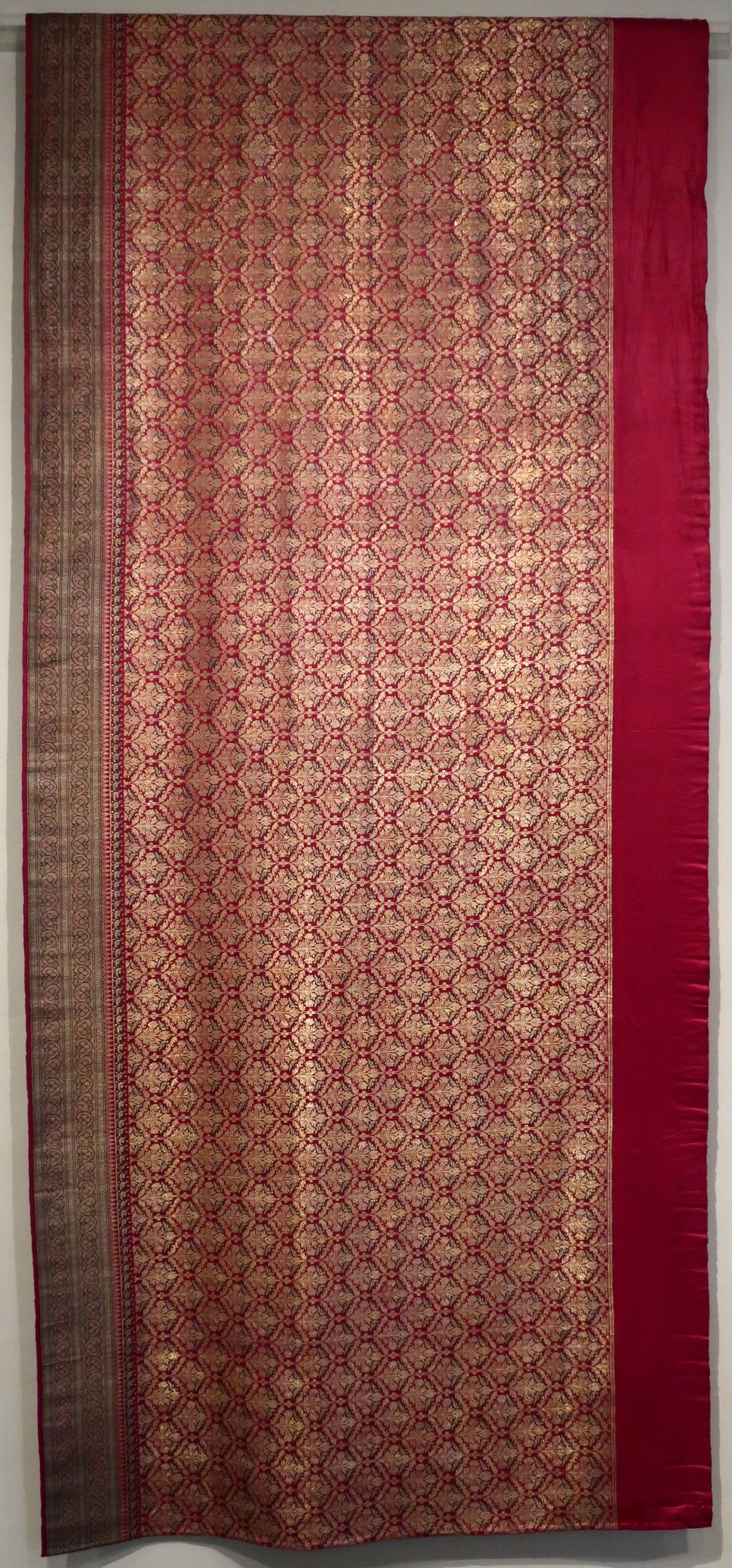 Honolulu Museum of Art. Wikimedia Commons, CC0.

Despite the devastation wrought on India's export textile industry, regional weaving traditions persisted and in some cases flourished during the 19th century. Banarasi silk weavers in Varanasi continued producing their renowned brocades with gold and silver zari thread, adapting designs to changing tastes while maintaining centuries-old weaving techniques. In Gujarat, patola double-ikat silk weaving survived as a specialized family craft, with each sari requiring painstaking labor to align pre-dyed warp and weft threads into precise patterns.
The Pochampally and Sambalpuri ikat traditions of southern and eastern India produced distinctive cotton and silk textiles with bold geometric patterns, while Chanderi in central India became known for its gossamer-light cotton-silk blend fabrics. In the northeast, Muga silk — a golden-hued wild silk unique to Assam — was woven into mekhela chadors prized for their luster and durability. Jamdani — a fine muslin textile historically known as Dhakai after the city of Dhaka — preserved the art of supplementary weft weaving, with weavers creating intricate floral and geometric patterns directly on the loom without sketching designs onto the fabric itself. These surviving traditions ensured that South Asia's extraordinary textile heritage, though diminished by colonial policies, was never extinguished.