Medieval West African clothing is known from two kinds of evidence: real textiles preserved in burial caves on the Bandiagara Escarpment in present-day Mali, the earliest dated to the eleventh century,1 and descriptions of the courts of Ghana, Mali, and Songhay by Arabic-writing geographers and travelers. Together they show a savanna world dressed in finely spun and woven cotton, white or dyed with indigo,1 where kings and officials marked their rank with sewn garments, turbans, gold, and imported fabrics.2,3,4
How We Know: Caves and Travelers
Cloth rarely survives in the tropics. The great exception is the Bandiagara Escarpment, where the dead were buried in their clothing in cave cemeteries, sometimes wrapped in a blanket.5 Researchers studied 29 caves there, and 13 of them contained textiles.5 Some five hundred textiles from thirteen cave burial contexts have been dated with carbon-14 testing. The earliest are eleventh-century fragments from Cave C, and the latest, from Cave F, date to the fifteenth or sixteenth century.1 The archaeologists Rogier Bedaux and Rita Bolland called them among the oldest textiles in sub-Saharan Africa.5
These textiles are attributed to the Tellem,1 who lived on the escarpment from about the eleventh to the sixteenth century and are believed to be predecessors of the present-day Dogon.16
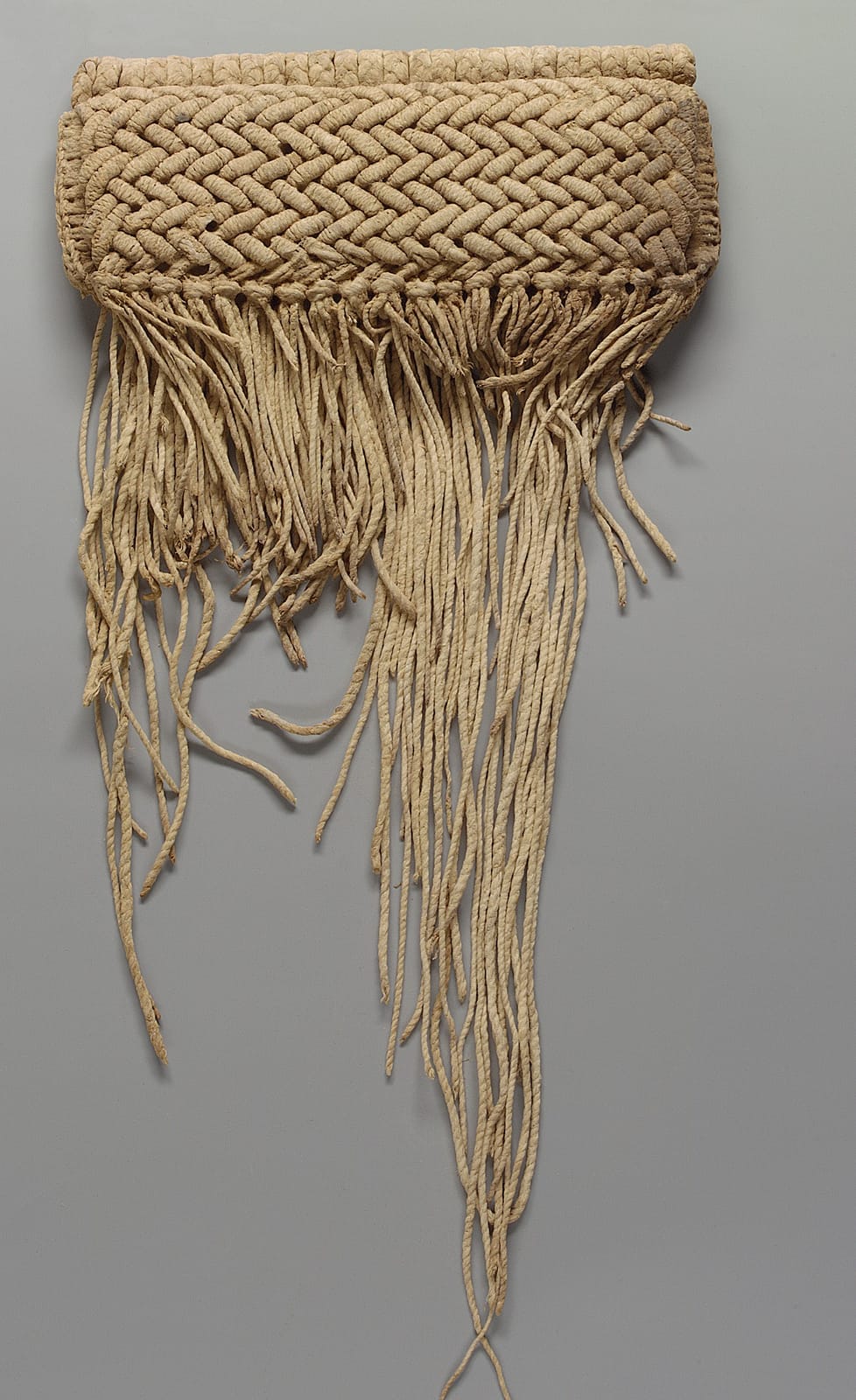
Even fiber dress survives here: the Met dates the fringed Tellem garment above to the twelfth century.8
The second kind of evidence is written. Geographers and travelers from North Africa and Muslim Spain described the West African kingdoms, though al-Bakri never left Spain and relied on merchants and other visitors.3,4 The most detailed is Ibn Battuta, who reached the Mali capital on 28 June 1352 and left it in February 1353.2 These writers focused on courts, towns, and Muslim communities, and they judged dress by the standards of their own faith. Their accounts tell us much about kings and very little about farmers.
Ghana: Sewn Clothes as a Royal Privilege
The kingdom of Ghana is described by the eleventh-century geographer al-Bakri. In the excerpt published by Boston University's African Studies Center, he reports that among the people who followed the king's religion, only the king and his heir apparent could wear sewn clothes. Everyone else wore robes of cotton, silk, or brocade according to their means.3
This rule shows how much tailoring meant. Among the king's co-religionists, a cut and stitched garment was a royal sign, and everyone else wore robes. The king himself wore a high cap decorated with gold and wrapped in a turban of fine cotton.3
Al-Bakri also seems to describe a narrow-strip loom at work in the town of Silla, in what is now Mauritania, in 1068.9 That is an early written hint of the narrow-strip loom, which is now found throughout most of West Africa.9
Mali: The Court Ibn Battuta Saw
Mali's best-known ruler, Mansa Musa, visited Cairo in 1324. The scholar al-Umari, who was in Cairo several years later, recorded that the sultan of Egypt sent Mansa Musa several complete suits of honor for himself and his courtiers.11 Gifts of clothing were part of the language of diplomacy on both sides of the Sahara.
Ibn Battuta's account of Mansa Sulayman's court a generation later is the fullest description of Mali dress. In the translation by H. A. R. Gibb, the sultan's usual dress was a velvety red tunic made of the European fabric called mutanfas, and on his head he wore a golden skullcap bound with a gold band.2 He sat under a silk canopy on a platform carpeted with silk.2 At the two great festivals, about thirty youths who performed with the interpreter Dugha wore red woolen tunics and white skullcaps.2
Dress also expressed submission. A subject called before the sultan took off his clothes, put on worn garments, and replaced his turban with a dirty skullcap, and he entered with his garments and trousers raised to the knee.2
Rank, Trousers, and the Tailasan
Mali's court used clothing to sort officials by rank. According to Gale's World Eras, Mali's cavalry commanders, the farariya, wore gold anklets and were allowed to wear wider trousers than other dignitaries. Mansa Musa wore even wider trousers, made from about twenty pieces of a cloth that only he was allowed to wear.4 The ruler kept the goodwill of these commanders with gifts of gold, imported Arabian horses, and luxurious clothing.4
The same summary describes a rule about the tailasan, a mantle. Mansa Sulayman wore a black turban and a tailasan, but most people could wear the tailasan only at the two great Muslim festivals, while judges, preachers, and jurists could wear it every day.4 Like the Ghana rule on sewn clothes, this was a sumptuary law: it reserved a garment for people of a certain standing.
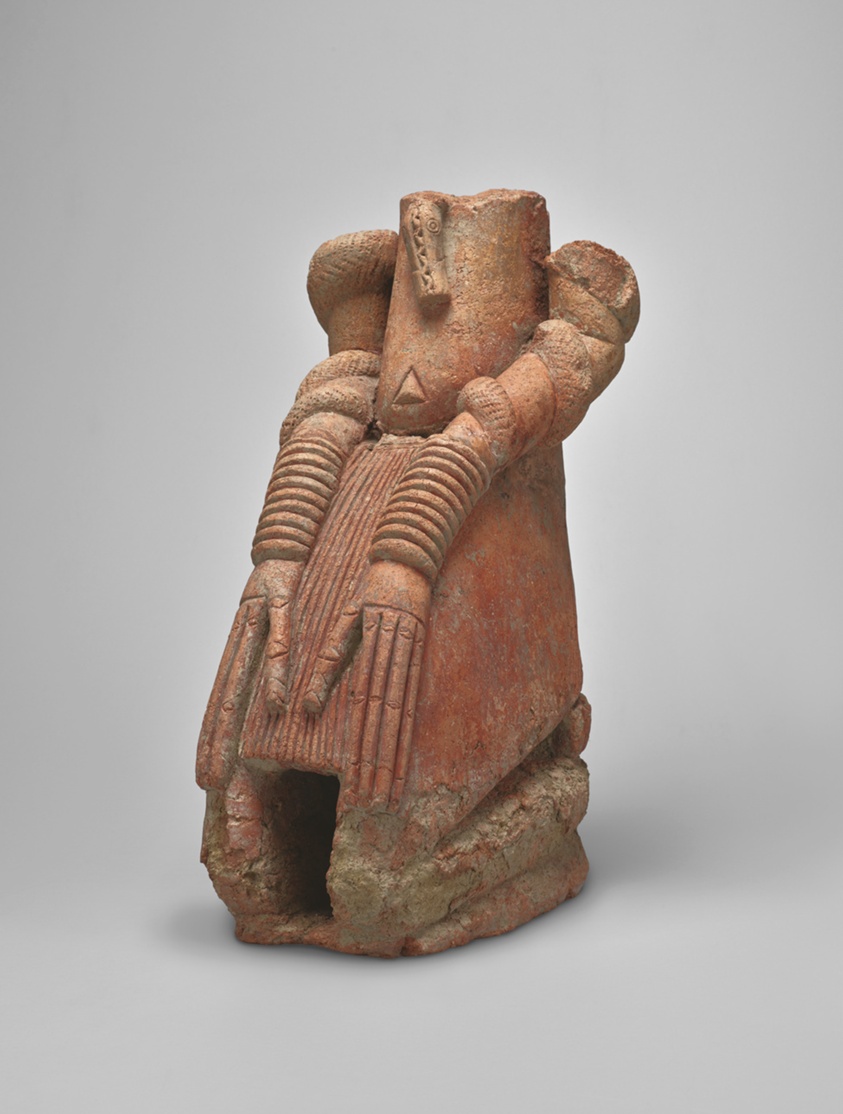
Sculpture from the Inland Niger Delta, around the old city of Jenne-Jeno, makes the same point in clay. On the kneeling figure above, the loincloth and stacked bracelets indicated high social rank.10
Men, Women, and Ordinary Dress
The written sources say most about men, because the travelers dealt with men. For Muslim townsmen, the ideal on Friday was cleanliness, not luxury. Ibn Battuta praised the people of Mali for wearing clean white garments on Fridays, and he noted that a man who owned nothing but an old worn shirt would wash it and wear it to the Friday prayer.2 On festival days, the women of the sultan's interpreter, Dugha, wore beautiful robes with gold and silver bands on their heads.2
Ibn Battuta was also shocked by what he saw. He complained that women servants, slave girls, and young girls went about naked in front of everyone, and that women came into the sultan's presence without coverings.2 This passage tells us that dress norms in Mali did not match those of a Muslim traveler from Morocco. It does not tell us that West Africans lacked clothing, and it is the observation of one offended outsider.
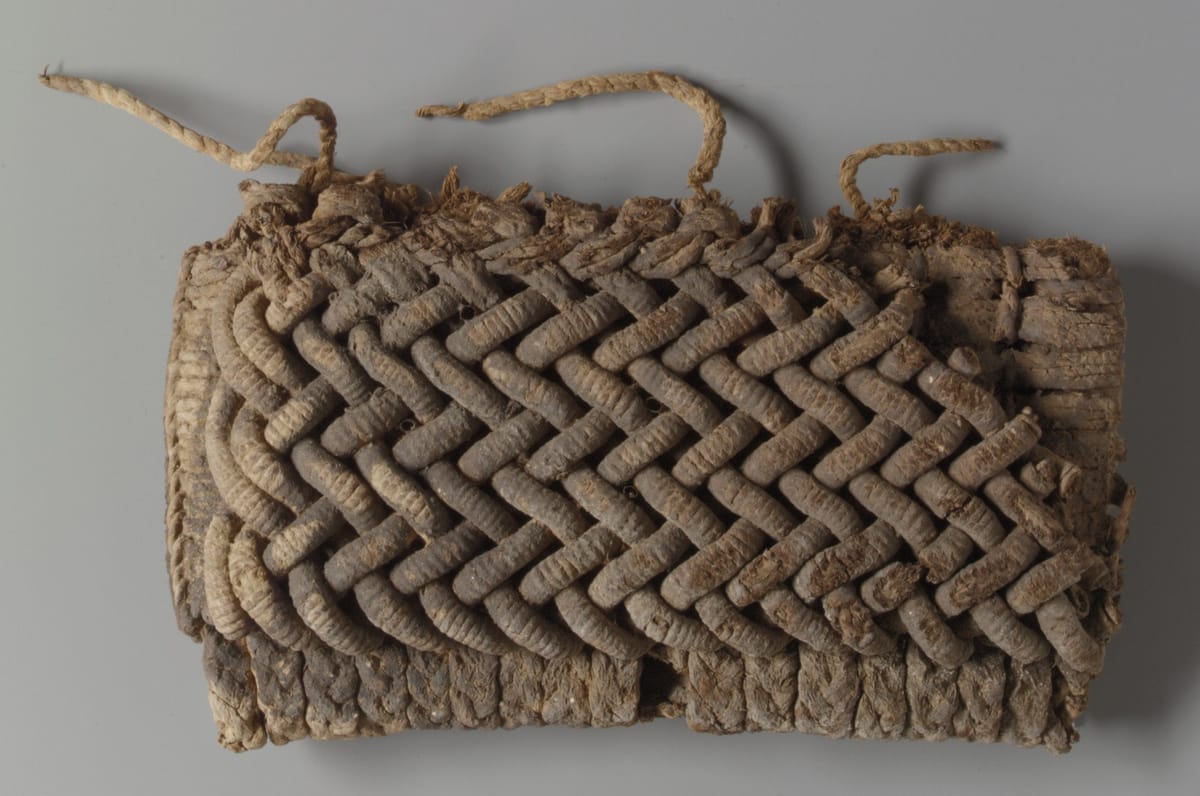
The Tellem caves show what ordinary people wore. Men's tunics with wide sleeves were sewn together from narrow strips of cotton cloth, cut either straight or in a gored shape that flares outward.6 The dead were sometimes wrapped in blankets.5 Fiber garments were also worn: the Met's cache-sexe, a fiber modesty skirt thought to have been worn low on the hips, dates to the twelfth century and was made of three layers of plaited and twined cord, probably from the inner bark of the baobab tree.7
Cotton, Strips, and Indigo
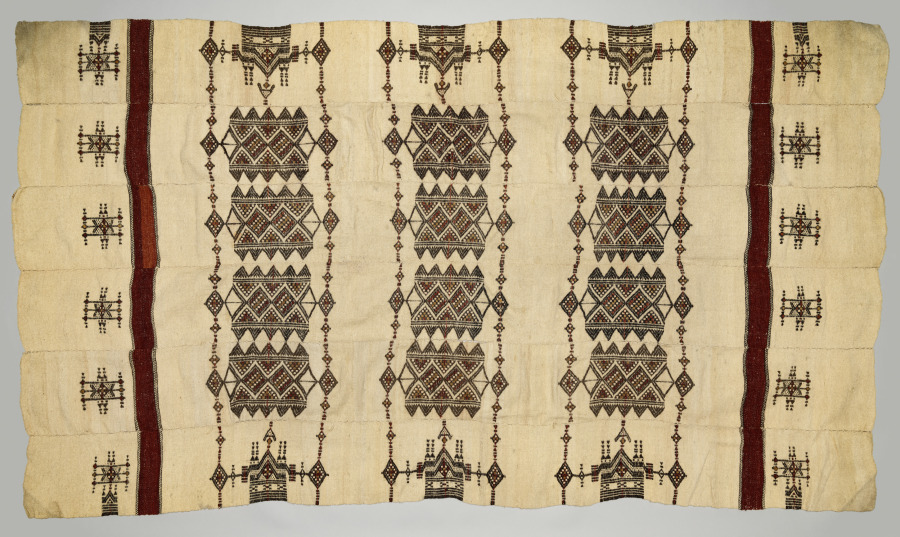
The core of West African dress was cotton woven on a narrow-strip loom. Weavers made long, narrow bands of cloth and sewed them together edge to edge into wrappers, blankets, and tunics. The Tellem tunics are made this way,6 and the same method survives today. A Fulani-style wool blanket made in the 1930s or earlier, for example, was woven in six strips that were sewn together at the selvages.15
The Tellem textiles are made of finely spun cotton thread, some left its natural white and some dyed with indigo.1 Wool also appears among the cave finds.1
By the end of the period, cotton and indigo were organized industries. Gale's summary reports that the people of Kano, in present-day Nigeria, began growing cotton and weaving it on narrow and broad looms around the year 1000.4 Kano's Kofar Mata indigo dye pits are said to have been founded in 1498.14
Trade Cloth and the Songhay Era
Cloth was more than clothing. One textile historian calls textiles "the trade good par excellence" of the region, because cloth was easy to carry, was of high value, lasted well, and was in demand everywhere.9 Cotton cloth could also serve as money. In Senegambia, for example, Wolof cloth was used as a medium of exchange and even for taxes.4
Imported fabrics marked the elite. Ibn Battuta's red mutanfas tunic was European cloth,2 and al-Bakri's Ghana already had people dressed in silk and brocade.3 Under Songhay, Leo Africanus described Timbuktu in the early sixteenth century.13 He wrote that the shops of weavers of cotton cloth were very numerous, that fabrics were imported from Europe by Berber merchants, and that the women of the city veiled their faces, except for the enslaved women who sold food.12 An older English translation speaks of weavers of "linen and cotton cloth."13 According to Gale's summary, the Muslim towns of Timbuktu and Djenné had many workshops of weavers and tailors.4
For the wider picture, including East and Southern Africa, see our survey of medieval African clothing.
Myths Corrected
"Islam brought clothing to West Africa." It is often said that Islam drove the spread of weaving, and Gale's summary notes that Muslim ideas of modesty did change daily dress.4,9 But the Tellem evidence does not fit the simple version. The Met argues that its twelfth-century fiber cache-sexe was made locally, which contradicts the myth that clothing was first introduced to sub-Saharan Africa through Islamic trade.7 One textile historian also argues that Islam was not a prerequisite for being a weaver.9
"Medieval West Africans were mostly unclothed." This idea rests on a few lines by outside observers, such as Ibn Battuta's complaint about women at the Mali court.2 The cave textiles show tunics, blankets, and fiber garments,6,5,7 and the written sources describe ordinary people in Ghana wearing robes of cotton, silk, or brocade.3
Quick Answers
What Did People Wear in the Mali Empire?
Men wore cotton tunics made from narrow woven strips,6 and Ibn Battuta mentions trousers, turbans, and skullcaps at court.2 Blankets were also in use, and the dead were sometimes wrapped in them.5 At court, the ruler wore a red tunic of imported fabric and a golden skullcap,2 and cavalry commanders showed rank through wide trousers and gold anklets.4
What Did Mansa Musa Wear?
According to Gale's World Eras, Mansa Musa wore very wide trousers made from about twenty pieces of a cloth that only he was allowed to wear.4 In Cairo in 1324, the Egyptian sultan gave him and his courtiers suits of honor.11
What Is the Oldest Surviving West African Cloth?
The oldest dated pieces of strip-woven cloth come from the Tellem burial caves of the Bandiagara Escarpment in Mali. The earliest fragments, from Cave C, date to the eleventh century.1,9 Some cloth from the region is older, however: a tunic and a shawl excavated from a burial site in the Republic of Niger have been dated to the second half of the eighth century.9
Did Medieval West Africans Use Indigo?
Yes. Some of the eleventh- to sixteenth-century Tellem cotton textiles are dyed with indigo.1 Indigo dyeing later became a large industry in cities such as Kano.14
Sources
- Blanket Fragment, Tellem civilization — The Metropolitan Museum of Art (carbon-14 dating of about five hundred textiles from thirteen cave contexts; Cave C and Cave F; cotton, undyed and indigo-dyed; wool in the medium line). Returned to the lender; archived copy.
- Ibn Battuta: Travels in Asia and Africa, 1325–1354 — trans. H. A. R. Gibb (London: Broadway House, 1929), Internet Medieval Sourcebook, Fordham University.
- Kingdom of Ghana — African Studies Center, Boston University (al-Bakri on sewn clothes, robes of cotton, silk, or brocade, and the king's cap and turban).
- Clothing and Ornaments — World Eras, Gale, via Encyclopedia.com (Mali trousers and rank, the tailasan rule, Kano cotton, Wolof cloth currency, Timbuktu and Djenné workshops).
- Tellem, reconnaissance archéologique d'une culture de l'Ouest africain au Moyen-Age : les textiles — R. M. A. Bedaux and Rita Bolland, Journal des Africanistes 50, no. 1 (1980), via Persée.
- Tunic, Tellem civilization — The Metropolitan Museum of Art (men's tunics with wide sleeves sewn from narrow cotton strips, straight or gored). Returned to the lender; archived copy.
- Cache-Sexe, Tellem peoples — The Metropolitan Museum of Art, 1998.478.5 (12th century; three layers of plaiting and twining; baobab bark cordage; local manufacture).
- Fragment of frontal garment, Tellem peoples — The Metropolitan Museum of Art, 1998.478.4 (object record via the Met Collection API).
- African Textiles: History — Duncan Clarke, Adire African Textiles (al-Bakri and the loom at Silla, 1068; textiles as "the trade good par excellence"; Islam and weaving).
- Fragment of a Kneeling Figure — Art Institute of Chicago (Inland Niger Delta, 11th–14th century; loincloth and bracelets indicating high social rank).
- Kingdom of Mali — African Studies Center, Boston University (al-Umari on Mansa Musa in Cairo, 1324, from Levtzion and Hopkins, Corpus of Early Arabic Sources for West African History, 1981).
- Leo Africanus: Description of Timbuktu from The Description of Africa (1526) — trans. Paul Brians, Washington State University.
- Kingdom of Songhai — African Studies Center, Boston University (older English translation of Leo Africanus on Timbuktu).
- Ancient indigo dye pits barely survive in Nigeria — Reuters, via History News Network, 2007.
- Blanket or Cover (Kaasa) — Cleveland Museum of Art.
- Female Figure — Art Institute of Chicago (the Tellem on the Bandiagara Escarpment from the 11th to the 16th century, believed predecessors of the Dogon).