Cotton and the Indus Valley Civilization
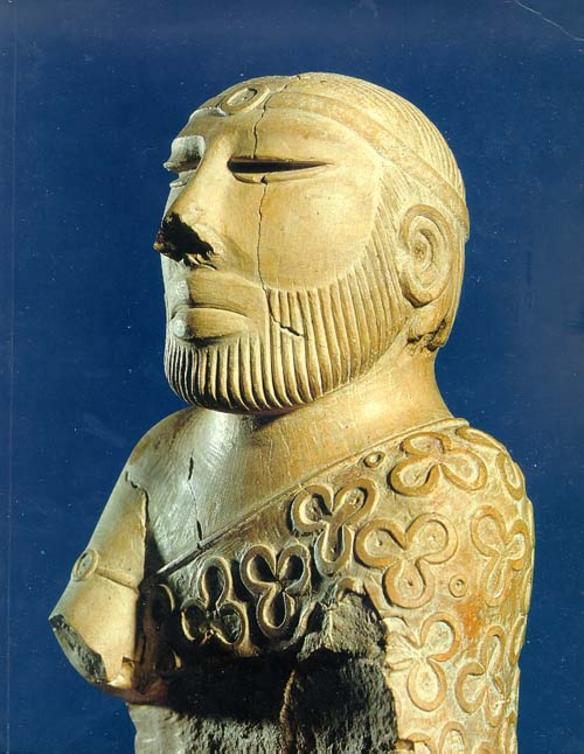
South Asia's greatest contribution to the global history of clothing is cotton. The earliest known cultivation of cotton (Gossypium arboreum) for textile use has been traced to the Indus Valley civilization, with fragments of cotton cloth discovered at the site of Mohenjo-daro dating to approximately 2500 BCE. However, evidence from the earlier site of Mehrgarh in Balochistan suggests that cotton fibers were being used as early as the sixth millennium BCE, making South Asia the birthplace of the world's most widely worn natural fiber.
The Indus Valley cities of Mohenjo-daro and Harappa reveal a civilization deeply engaged in textile production. Numerous spindle whorls and fragments of woven cotton cloth have been recovered from these sites, and the uniformity of thread diameter in surviving samples suggests the use of well-developed spinning techniques. Terracotta figurines from Indus sites depict individuals wearing what appear to be draped garments and elaborate headdresses, indicating that clothing served decorative and possibly ritual functions alongside practical ones.
Early Weaving and Dye Traditions
Before the rise of the Indus cities, South Asia's earlier Neolithic and Chalcolithic communities relied on a combination of animal hides, plant fibers, and bark for body covering. Sites in the Deccan Plateau and the Ganges Plain have yielded evidence of early weaving in the form of textile impressions on pottery and collections of spindle whorls. The development of settled agriculture in these regions provided both the raw materials — cotton and other plant fibers — and the stable conditions necessary for textile craft specialization.
The Indus Valley people also appear to have been early practitioners of textile dyeing. Traces of madder (a red dye derived from the Rubia plant) have been identified on cotton fragments from Mohenjo-daro, representing some of the earliest evidence of dyed cloth anywhere in the world. The presence of standardized weights and measures across Indus cities suggests that textiles may have been produced not only for local use but also for trade — a hypothesis supported by the discovery of Indus-style cotton cloth fragments in Mesopotamian archaeological contexts. South Asia's prehistoric textile traditions thus laid the groundwork for the subcontinent's long history as a center of cotton production and trade.