Islamic Golden Age Textiles (7th–13th Century)
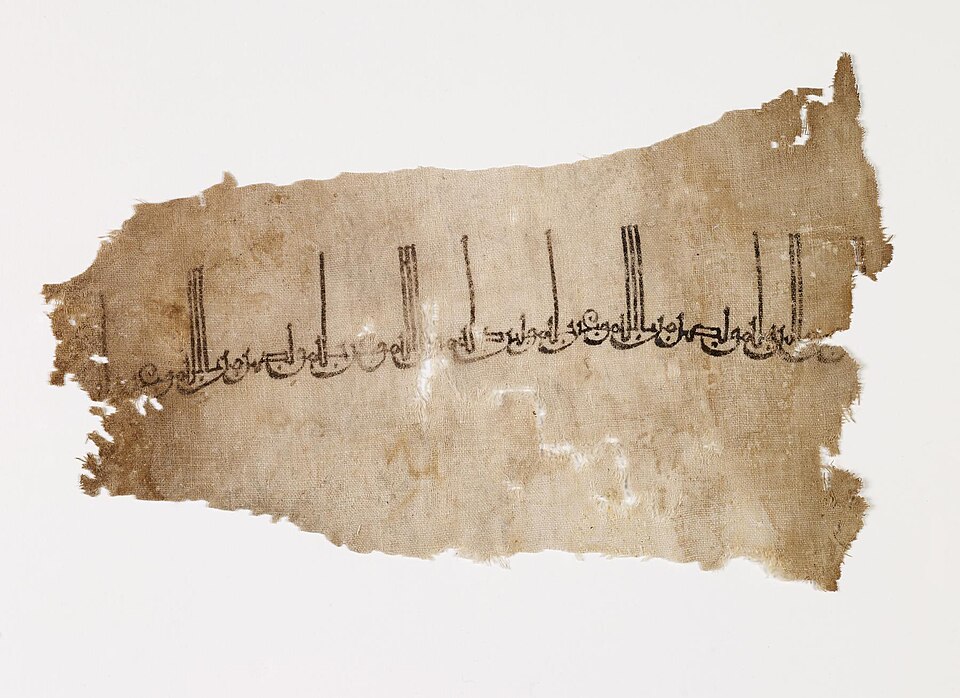
The rise of Islam created a vast cultural zone stretching from Spain to the borders of China, and with it came one of history's great textile traditions. Tiraz — fabrics bearing embroidered or woven inscription bands, often with the name of the ruling caliph — served as both luxury goods and instruments of political authority. Produced in state-controlled workshops called dar al-tiraz, these textiles were given as robes of honor (khil'a) to officials and foreign dignitaries, making clothing a direct expression of caliphal power. The khil'a ceremony became one of the most important rituals of Islamic court life, with the quality and number of garments bestowed reflecting the recipient's standing.
Middle Eastern weavers excelled in silk production, absorbing techniques from Byzantine and Sasanian traditions and pushing them further. Cities like Baghdad, Damascus, and Cairo became renowned centers of textile manufacture. Damask (named for Damascus) and muslin (associated with Mosul) entered European languages as testaments to the region's prestige. Weavers produced elaborate compound weaves featuring symmetrical animal motifs, geometric patterns, and arabesques that influenced textile design across the medieval world.
Dress and Adornment
The basic structure of medieval Middle Eastern dress consisted of layered garments. Men typically wore a qamis (shirt), over which they placed a jubba (a sleeved overcoat) or ridā' (a draped mantle). The turban was perhaps the single most important accessory — its size, color, and wrapping style communicated religious identity, social rank, and regional origin. Scholars, merchants, and rulers each had distinctive turban styles, and Islamic legal tradition gave the turban deep cultural significance beyond mere fashion.
Women's dress varied considerably by region and social class, but typically included a long chemise, trousers, and one or more outer robes. Veiling practices ranged from the light head covering worn in daily life to the full-length burqu' or face veil adopted by elite urban women. Textiles used for women's garments were often richly decorated; surviving fragments reveal intricate ikat dyeing, gold-thread embroidery, and resist-printed patterns. Cosmopolitan cities like medieval Cairo supported thriving markets where fabrics from across the Islamic world — Egyptian linen, Syrian silk, Indian cotton — could all be found, reflecting the enormous geographic reach of medieval Islamic trade networks.