Early Medieval (500–1000 CE)
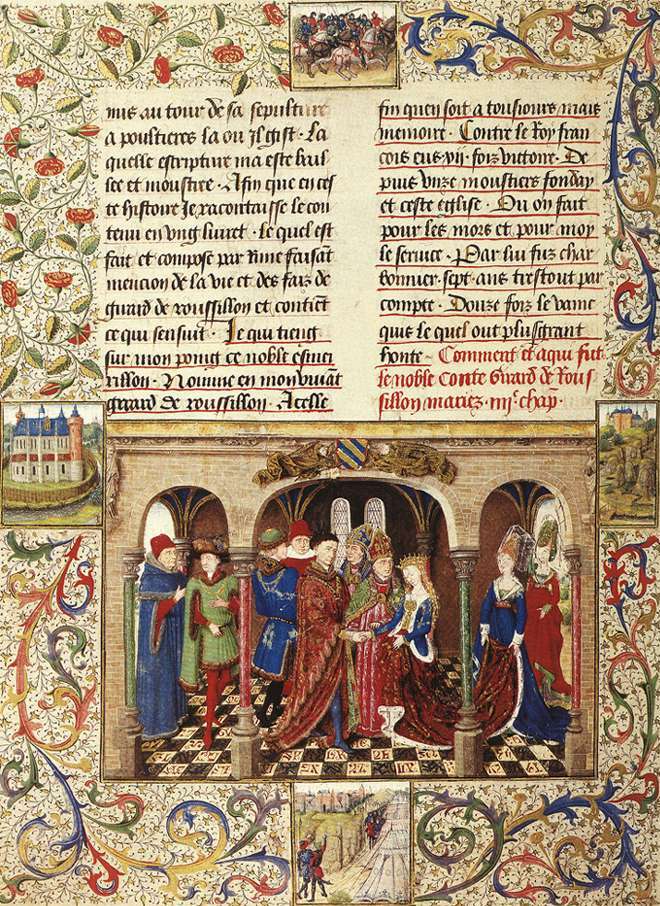
In the centuries following the fall of Rome, European clothing simplified considerably. Both men and women wore layered tunics — a shorter undertunic of linen and a longer outer tunic of wool. Men typically wore leg wrappings or hose beneath their tunics, while women's garments reached to the ankles. Cloaks fastened with brooches provided warmth and served as a display of status through their fabric quality and ornamentation.
Germanic, Celtic, and Norse peoples brought their own textile traditions, favoring woven patterns, tablet-woven trims, and natural dyes from plants like woad (blue) and madder (red). Clothing construction remained relatively simple — most garments were assembled from rectangular pieces of fabric to minimize waste from the labor-intensive weaving process.
High and Late Medieval (1000–1500 CE)
The Crusades and expanding trade routes brought new fabrics, dyes, and tailoring techniques to Europe. By the 12th century, garments began to be cut and sewn to fit the body more closely. The cotehardie, a fitted tunic with buttons down the front, replaced the loose earlier styles. Women's dress grew more elaborate, with fitted bodices, flowing skirts, and dramatic sleeves.
The 14th and 15th centuries saw an explosion of fashion consciousness among the European elite. Houppelandes — voluminous gowns with wide sleeves — swept the courts. Sumptuary laws attempted to restrict certain fabrics, colors, and styles to particular social classes, reflecting how deeply clothing had become entangled with identity and power.