West African Textile Kingdoms
The Asante Empire of present-day Ghana elevated kente cloth into one of the world's most recognizable textile traditions. Woven on narrow strip looms by male weavers, kente consisted of long, thin bands of silk or cotton stitched together into a large wrapper. Each pattern carried a specific name and meaning — some were reserved exclusively for royalty. The Asante sourced silk for their finest kente by unraveling imported European and Asian fabrics and re-weaving the threads into distinctly African patterns, demonstrating how global trade was absorbed and transformed by local artistic traditions.
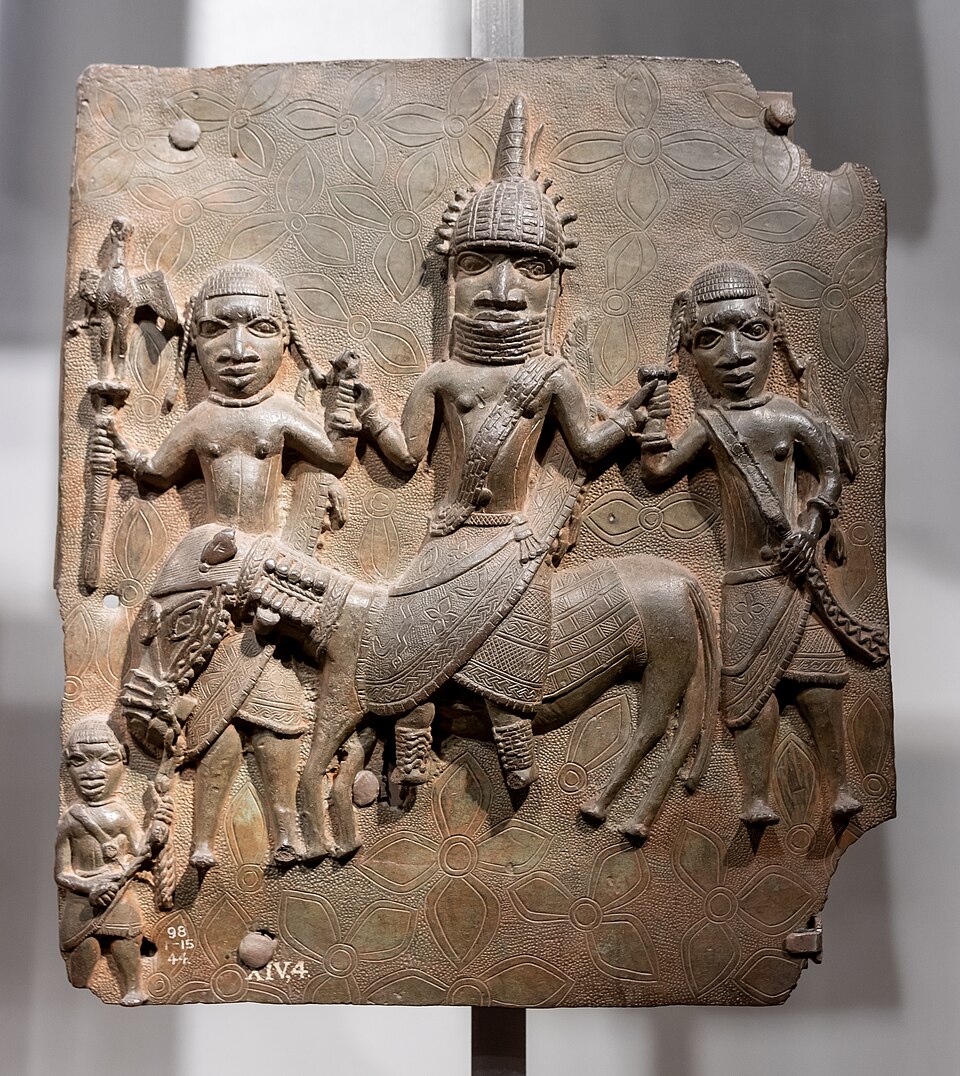
Further east, the Kingdom of Benin (in present-day Nigeria) developed a court dress tradition of extraordinary elaboration. The Oba (king) and his chiefs wore garments adorned with coral beads — vast quantities strung into crowns, chokers, chest coverings, and ankle-to-wrist arrays that sheathed the body in red. Coral was a royal monopoly, and its display signaled proximity to divine kingship. Beyond coral, Benin's weavers produced fine cotton textiles, while the kingdom's famous brass plaques depict warriors and courtiers wearing elaborate wrappers, leopard-skin regalia, and iron or brass ornaments that reflected a sophisticated visual language of rank and power.
Trade, Transformation, and Textile Exchange
The early modern period brought transformative new materials into sub-Saharan African dress through expanding trade networks. From the Indian Ocean coast, Indian cotton textiles — block-printed and resist-dyed — flowed into East and Central Africa, becoming integrated into local dress customs. Along the West African coast, the arrival of European traders in the fifteenth century introduced trade cloth from the Netherlands, England, and Portugal, which African consumers adopted selectively, favoring certain colors and patterns while rejecting others.
Despite these imports, indigenous textile production remained vibrant. In the Sahel, the Fulani people perfected khasa blankets — thick cotton wrappers with bold geometric patterns in indigo and white. The Yoruba of southwestern Nigeria developed aso oke cloth, a prestige fabric woven on vertical looms and used for ceremonial wrappers. In the Kongo Kingdom, raffia cloth woven from palm fiber was produced in enormous quantities, serving as both garment material and currency. The bark cloth traditions of the Great Lakes region — where the inner bark of fig trees was beaten into a soft, leather-like fabric — represented yet another independent African textile innovation that predated and persisted alongside imported fabrics.