Women's Fashion and the Changing Silhouette
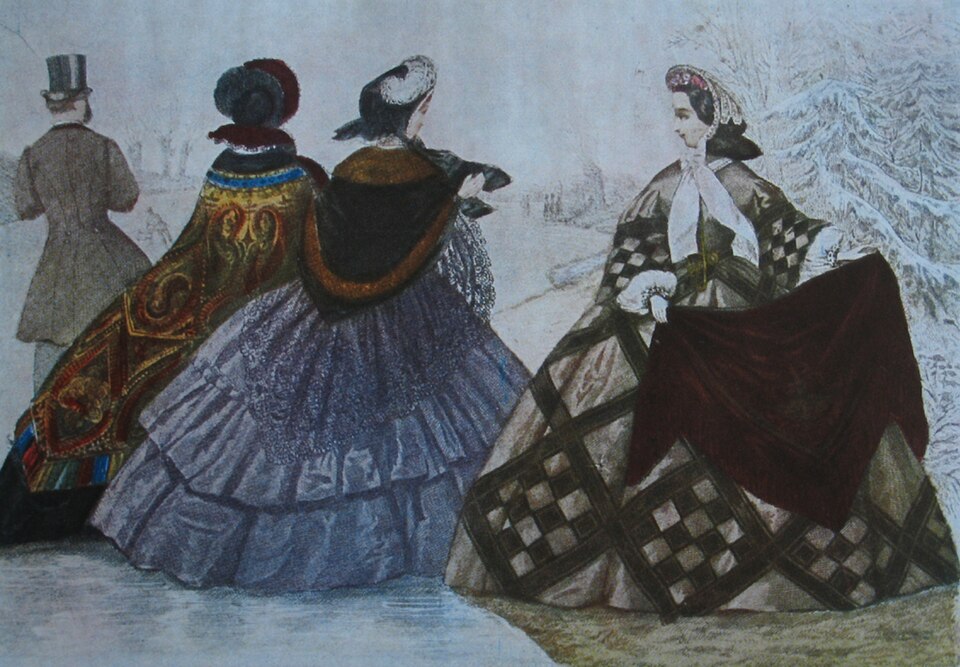
The 19th century saw women's fashion undergo dramatic transformations decade by decade. In the early 1800s, the high-waisted Empire dress inspired by classical antiquity dominated, featuring a narrow columnar silhouette in lightweight muslin. By the 1830s and 1840s, waistlines dropped and skirts widened, supported first by layers of stiffened petticoats and then by the revolutionary crinoline — a cage-like frame of steel hoops that allowed skirts to reach extraordinary widths by the late 1850s.
The crinoline gave way in the 1870s to the bustle, a padded structure that projected fabric dramatically behind the wearer, shifting visual emphasis to the back of the dress. Throughout these changes, the tightly laced corset remained a constant foundation garment, shaping the torso into the fashionable ideal. By the 1890s, the Gibson Girl look emerged with its leg-of-mutton sleeves and hourglass figure, pointing toward the new century's silhouettes.
Men's Wear and the Rise of the Suit
The 19th century was the period in which the modern men's suit took shape. Early in the century, men still wore knee breeches and elaborate coats, but by mid-century the frock coat worn with long trousers had become standard daytime dress. The influence of Beau Brummell and the English tailoring tradition established dark, well-fitted clothing as the masculine ideal, replacing the colorful silks of the previous era.
By the century's end, the lounge suit — ancestor of the modern business suit — was gaining acceptance for everyday wear. The top hat gave way to the bowler and later the homburg for less formal occasions. The Industrial Revolution made ready-made clothing increasingly available through new department stores, democratizing fashion beyond the wealthy elite. Sewing machines, synthetic dyes like mauveine, and mass-produced textiles fundamentally changed how clothing was made and who could afford it.