Animal Hides and Northern Traditions
The earliest inhabitants of the Americas, who crossed from Asia via the Beringia land bridge during the last Ice Age, brought with them well-established traditions of working animal hides and furs into cold-weather clothing. In the Arctic and sub-Arctic regions, survival depended on expertly tailored garments: caribou hide parkas, fur-lined boots, and mittens stitched with sinew thread using bone needles. These garments were not crude wrappings but precisely fitted pieces designed to trap body heat while allowing moisture to escape — principles of layered insulation that remained effective for millennia.
Across the temperate zones of North America, indigenous peoples developed diverse clothing traditions suited to their environments. On the Great Plains, bison hides provided material for robes, leggings, and moccasins, processed through laborious cycles of scraping, braining, and smoking to produce soft, durable buckskin. In the woodlands of eastern North America, deerskin was the primary clothing material, often decorated with porcupine quill embroidery, shell beads, and plant-based dyes. In warmer southern regions, clothing was lighter and sometimes minimal, with woven plant fibers, Spanish moss, and palm fronds serving as materials for skirts, breechcloths, and capes.
Early Cotton and Agave Fibers in Mesoamerica and South America
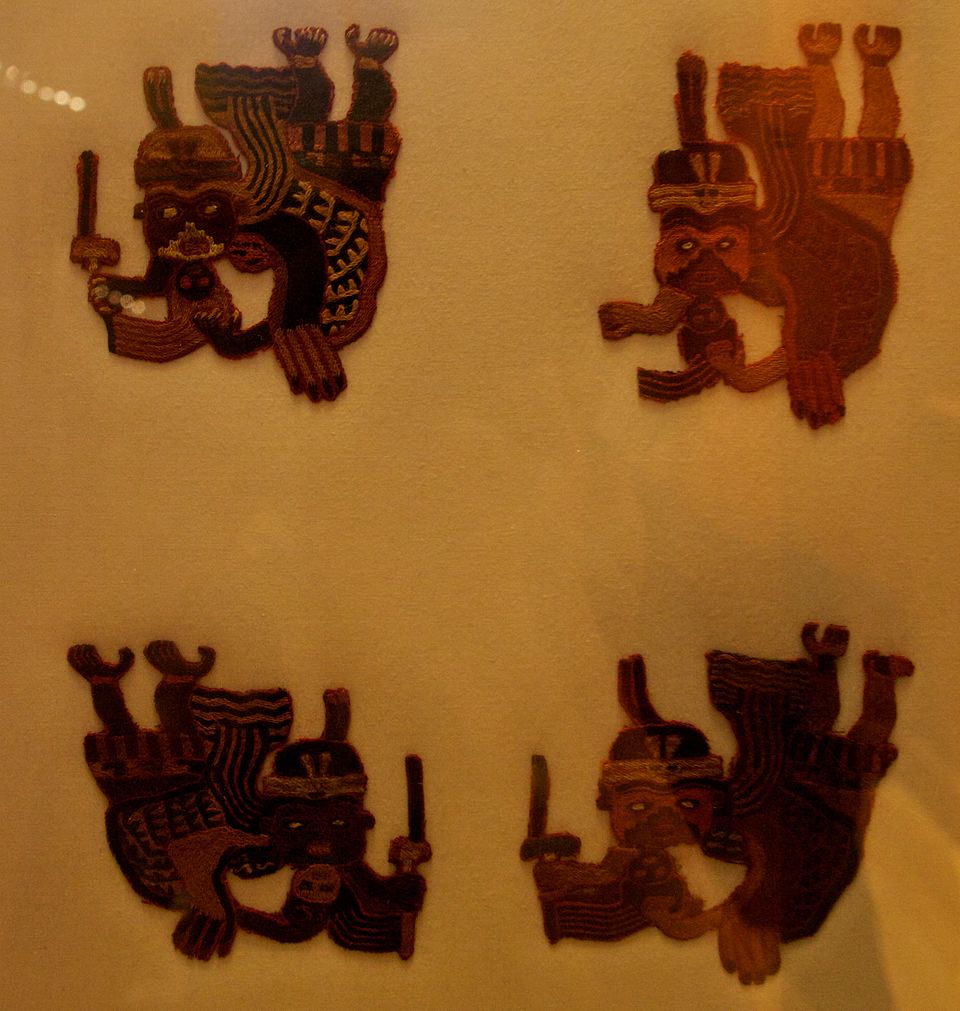
The Americas were an independent center of cotton domestication. In South America, the site of Huaca Prieta on the coast of Peru has yielded cotton textiles dating to approximately 2500 BCE, among the oldest in the Western Hemisphere. These early Peruvian weavers produced remarkably sophisticated fabrics using twining techniques — interlocking weft threads around warp threads by hand, before the development of true loom weaving. Some Huaca Prieta textiles feature complex geometric and figural designs, including depictions of condors and serpents, demonstrating that textile art was already highly developed in this early period.
In Mesoamerica, agave fibers (known as ixtle) and wild cotton were the principal plant-based textile materials of the prehistoric period. Agave leaves were scraped and pounded to extract tough, durable fibers that could be spun and woven into cloth, sandals, and cordage. In the Andes, indigenous communities also domesticated camelids — llamas and alpacas — and their soft wool became a prized textile fiber alongside cotton. The dual tradition of plant and animal fibers in South America laid the foundation for the extraordinary textile traditions of later Andean civilizations, whose weavings would rank among the finest produced anywhere in the ancient world.