Renaissance and Reformation (1500–1650)
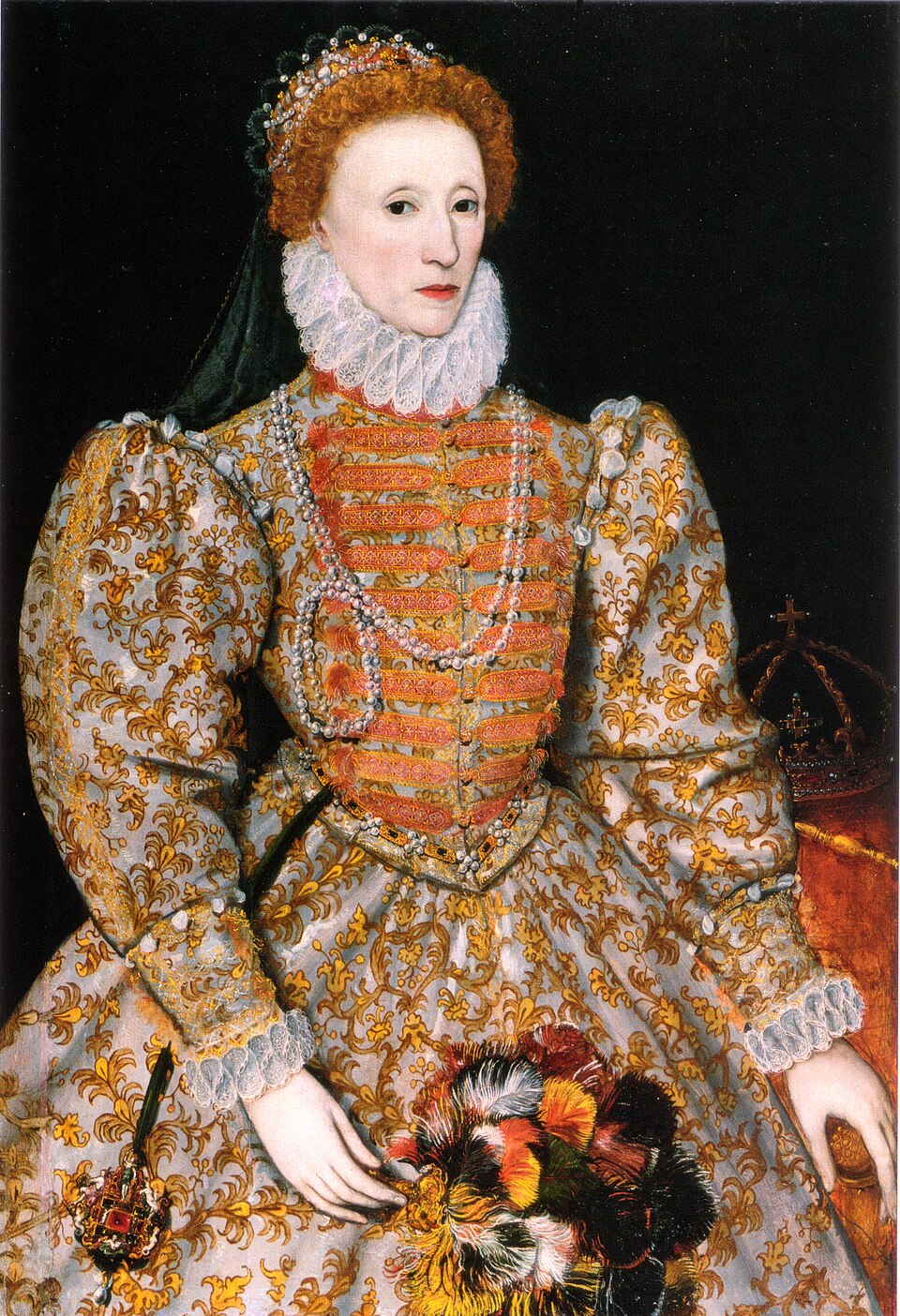
The sixteenth century saw European clothing transform from the flowing lines of the late medieval period into stiff, structured silhouettes that encased the body like armor. The ruff, a pleated and starched collar radiating outward from the neck, became the defining accessory of the age, worn by men and women across Protestant and Catholic Europe alike. Women's dress relied on the farthingale, a hooped underskirt that created a wide, conical shape, while bodices were stiffened with busks — rigid inserts of wood, bone, or metal that flattened the torso into an idealized form.
Men's fashion was equally dramatic. The doublet, a fitted padded jacket, was paired with trunk hose — short, puffed breeches stuffed with horsehair or rags to achieve a rounded shape. Slashing, the practice of cutting slits into the outer fabric to reveal contrasting linings beneath, became wildly popular across the courts of England, Spain, and the German states. Fabric choices signaled wealth and allegiance: Spanish black wool projected Catholic sobriety, while the English court favored embroidered silks and cloth of gold.
Baroque and Rococo (1650–1800)
The mid-seventeenth century brought a dramatic loosening of silhouette as French taste began to dominate European fashion. Under Louis XIV, the justaucorps, a long fitted coat with wide cuffs, replaced the doublet as the standard male garment, worn over a waistcoat and paired with breeches and silk stockings. Elaborate periwigs — large curled wigs — became essential for men of rank, and the French court at Versailles became the undisputed capital of European fashion.
Women's dress in the eighteenth century reached new heights of artifice. The mantua, an open-fronted gown draped over wide panniers (side hoops that extended the skirt laterally), created the characteristic wide-hipped silhouette of the Rococo period. Fabrics grew lighter and more decorative, with pastel-colored silks featuring floral brocades and delicate lace trimmings. The corset, now a fully boned undergarment, cinched the waist and pushed the bust upward, shaping the fashionable posture of the era. By the 1780s, a reaction against courtly excess had begun, with simpler muslin gowns and natural hairstyles heralding the coming revolution in dress.