Ice Age Garments
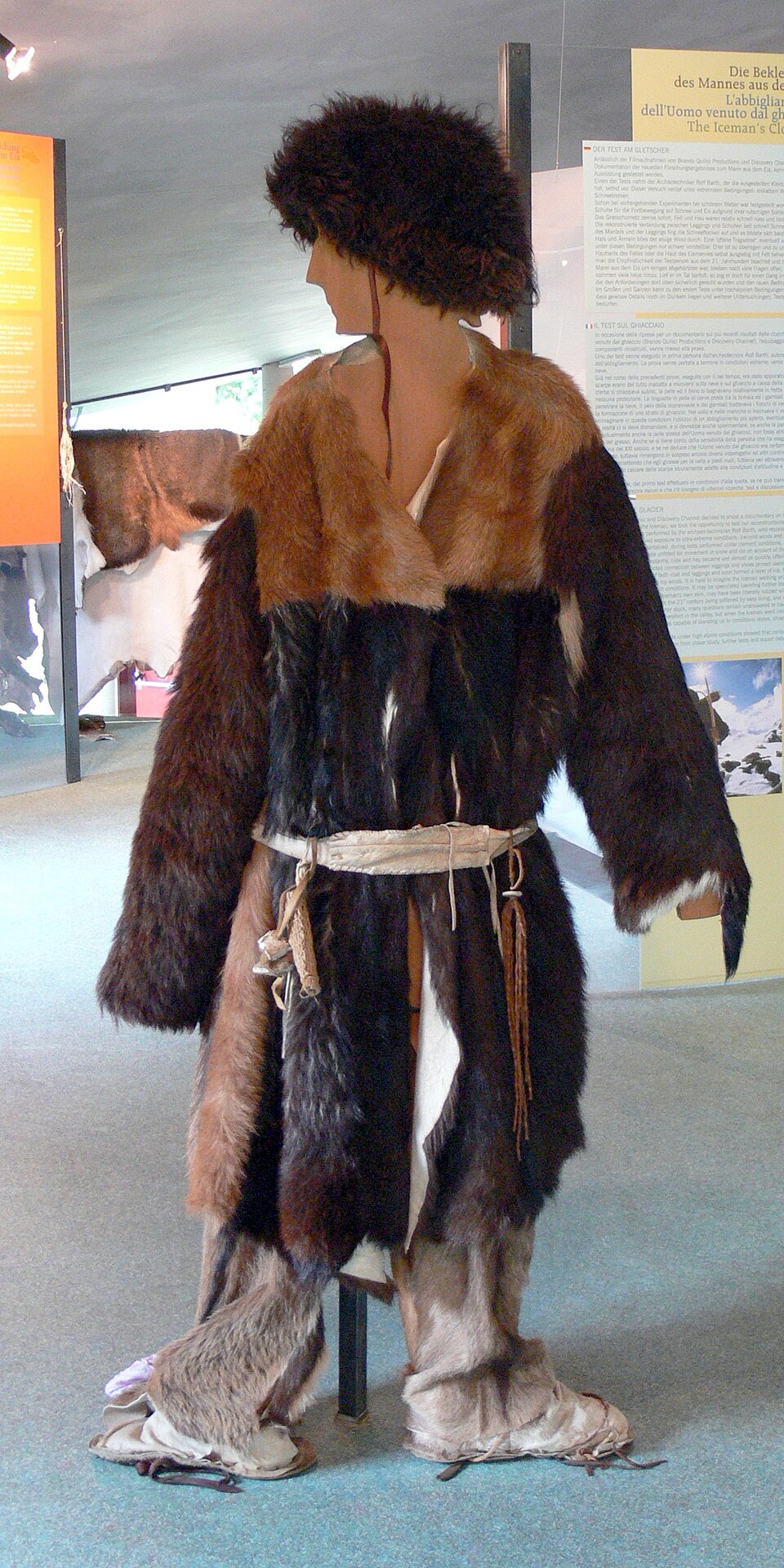
The earliest evidence of clothing in Europe dates back tens of thousands of years, when Ice Age populations relied on animal hides and furs to survive harsh glacial conditions. Archaeological finds of bone needles and awls — some dating to 40,000 years ago — demonstrate that early Europeans were not simply draping skins over their bodies but actively tailoring them into fitted garments. These tools allowed for the stitching of hides using sinew thread, creating seams that provided better insulation and freedom of movement for hunting and daily life.
The most extraordinary window into prehistoric European dress is Ötzi the Iceman, a naturally mummified man discovered in the Alps dating to approximately 3300 BCE. His clothing was a complex, layered ensemble: a hide coat stitched from goat and sheep skins, leggings made of goat hide, a grass cloak for rain protection, a bearskin cap, and calfskin shoes stuffed with grass for insulation. Ötzi's outfit reveals that prehistoric Europeans understood the properties of different animal skins and grasses, selecting specific materials for specific purposes.
Early Textiles and Linen
As the climate warmed after the last Ice Age, Europeans began experimenting with plant-based fibers. Flax was among the earliest cultivated textile plants in Europe, with evidence of linen production appearing in sites across the Balkans and central Europe by the sixth millennium BCE. The Neolithic revolution brought settled agricultural life and with it the time and resources to develop more sophisticated textile crafts, including spinning with simple drop spindles and weaving on rudimentary looms.
Evidence from lake dwelling sites in Switzerland and other Alpine regions has preserved remarkable fragments of Neolithic textiles, including woven linen cloth and plant-fiber cordage. The development of warp-weighted looms during this period represented a major technological leap, enabling the production of wider and more uniform fabrics. By the late Neolithic and early Bronze Age, European communities were producing dyed textiles, with woad providing blue and various plant sources yielding yellows and browns — a far cry from the unadorned animal hides of their Ice Age ancestors.