Tradition, Modernization, and National Identity
The twentieth century brought dramatic shifts to Middle Eastern clothing as the region navigated colonialism, independence, and rapid modernization. In Turkey, Mustafa Kemal Ataturk's 1925 Hat Law banned the fez and actively promoted Western dress as part of sweeping secularization reforms. Iran saw similar state-driven changes: Reza Shah banned the veil in 1936, while the 1979 Islamic Revolution later mandated the hijab for women, making clothing a flashpoint in political struggles over modernity, religion, and national identity.
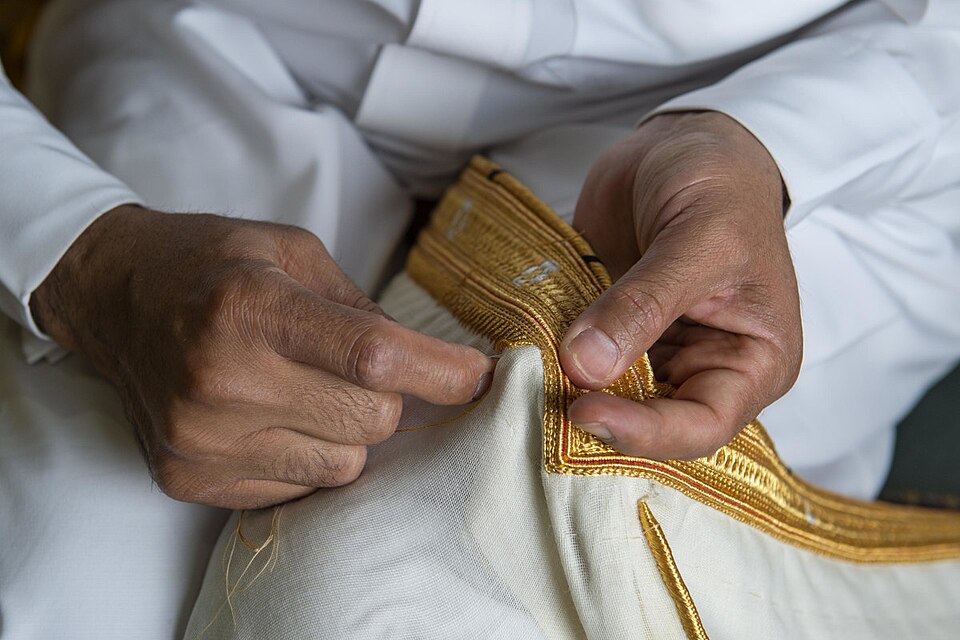
In the Arabian Gulf states, traditional garments maintained their prominence even as oil wealth transformed societies. The men's thobe (or dishdasha) — a long white robe — and the keffiyeh (or ghutra) head covering remained standard dress, evolving in fabric quality and tailoring while preserving their essential form. Women in the Gulf adopted the abaya, a flowing black over-garment, which became a canvas for increasingly elaborate embroidery, beading, and designer touches. Across the broader region, the kaftan experienced periodic revivals, reinterpreted by designers who honored its centuries-old silhouette while updating it with contemporary textiles and embellishment.
The Modest Fashion Movement and Gulf Luxury
The early twenty-first century saw the emergence of modest fashion as a global movement with deep roots in the Middle East. Designers and entrepreneurs — many of them young Muslim women — created clothing lines that combined full coverage with contemporary style, proving that modesty and fashion-forward design were not mutually exclusive. The hijab itself became a fashion statement, with intricate wrapping styles, luxury fabrics, and coordinated color palettes. International brands took notice: Nike launched the Pro Hijab in 2017, and major fashion houses began featuring hijab-wearing models on runways and in advertising campaigns.
The Gulf states, particularly Dubai and Saudi Arabia, established themselves as luxury fashion capitals. Dubai Fashion Week and Saudi Fashion Week attracted international attention, while homegrown designers like Elie Saab (Lebanon) and Reem Acra became fixtures of global red-carpet fashion. The opening of Saudi Arabia's fashion sector following social reforms in the late 2010s unleashed a wave of creativity, with young Saudi designers exploring the intersection of traditional silhouettes and cutting-edge design. This regional fashion scene reflected a broader cultural confidence — a determination to participate in global fashion on the Middle East's own terms rather than simply adopting Western norms.