The Age of Haute Couture
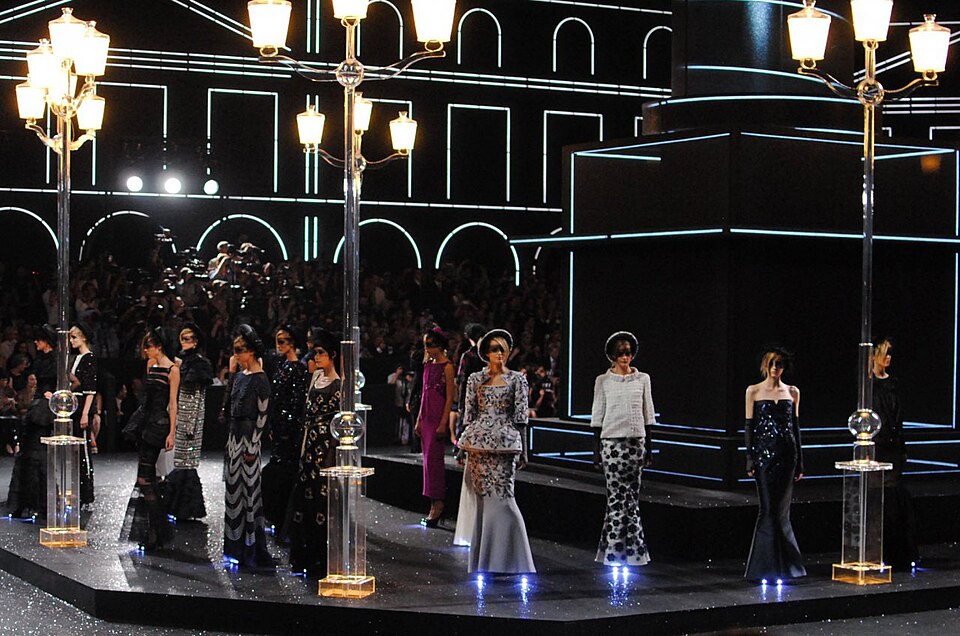
The twentieth century opened with Paris firmly established as the global capital of fashion. Haute couture — the tradition of custom-fitted, handmade clothing produced by elite fashion houses — reached its zenith in the early 1900s under designers like Paul Poiret, who liberated women from the corset in favor of flowing, columnar silhouettes. The interwar period brought Coco Chanel's revolutionary approach: her little black dress, tweed suits, and jersey knits transformed luxury from ostentatious ornament into understated elegance. Chanel made simplicity chic and borrowing from menswear fashionable.
After World War II, Christian Dior's 1947 New Look — with its cinched waist, padded hips, and voluminous skirt — reasserted Paris as the center of fashion. The silhouette used lavish amounts of fabric in deliberate contrast to wartime rationing, signaling a return to femininity and abundance. Through the 1950s and 1960s, European designers like Cristobal Balenciaga, Hubert de Givenchy, and Yves Saint Laurent continued to set global trends, with Saint Laurent's Le Smoking tuxedo for women becoming one of the century's most iconic garments.
Fast Fashion and Contemporary European Style
The late twentieth century saw a dramatic democratization of European fashion. Italian houses like Gucci, Prada, and Versace rose to rival Paris, while London's punk movement — driven by Vivienne Westwood and Malcolm McLaren — injected anarchic energy into mainstream fashion with tartan, safety pins, and deliberately torn fabrics. Belgian designers of the Antwerp Six, including Dries Van Noten and Ann Demeulemeester, challenged conventional beauty with deconstructed, avant-garde silhouettes in the 1980s and 1990s.
By the 2000s, Swedish retailer H&M and Spanish chain Zara pioneered fast fashion, translating runway trends into affordable clothing with unprecedented speed. This model transformed consumer expectations but also drew criticism for its environmental toll and labor practices. Today, European fashion exists in tension between its couture heritage and sustainability movements, with designers increasingly turning to upcycled materials, zero-waste pattern cutting, and circular fashion models that aim to reconcile the continent's outsized influence on global dress with the ecological costs of mass production.