Mesopotamian and Egyptian Dress
In ancient Mesopotamia, one of the earliest and most distinctive garments was the kaunakes, a skirt or wrap made from sheepskin with the fleece left on, or later woven to imitate tufted fleece. Sumerian statues from the third millennium BCE show men and women wearing these layered, petal-like skirts. As weaving technology advanced, wool and linen fabrics replaced raw hides, and draped rectangular cloths became the norm. The shawl — a large rectangle of fabric wrapped around the body — was worn by Assyrian and Babylonian elites, often richly embroidered with geometric and floral motifs.
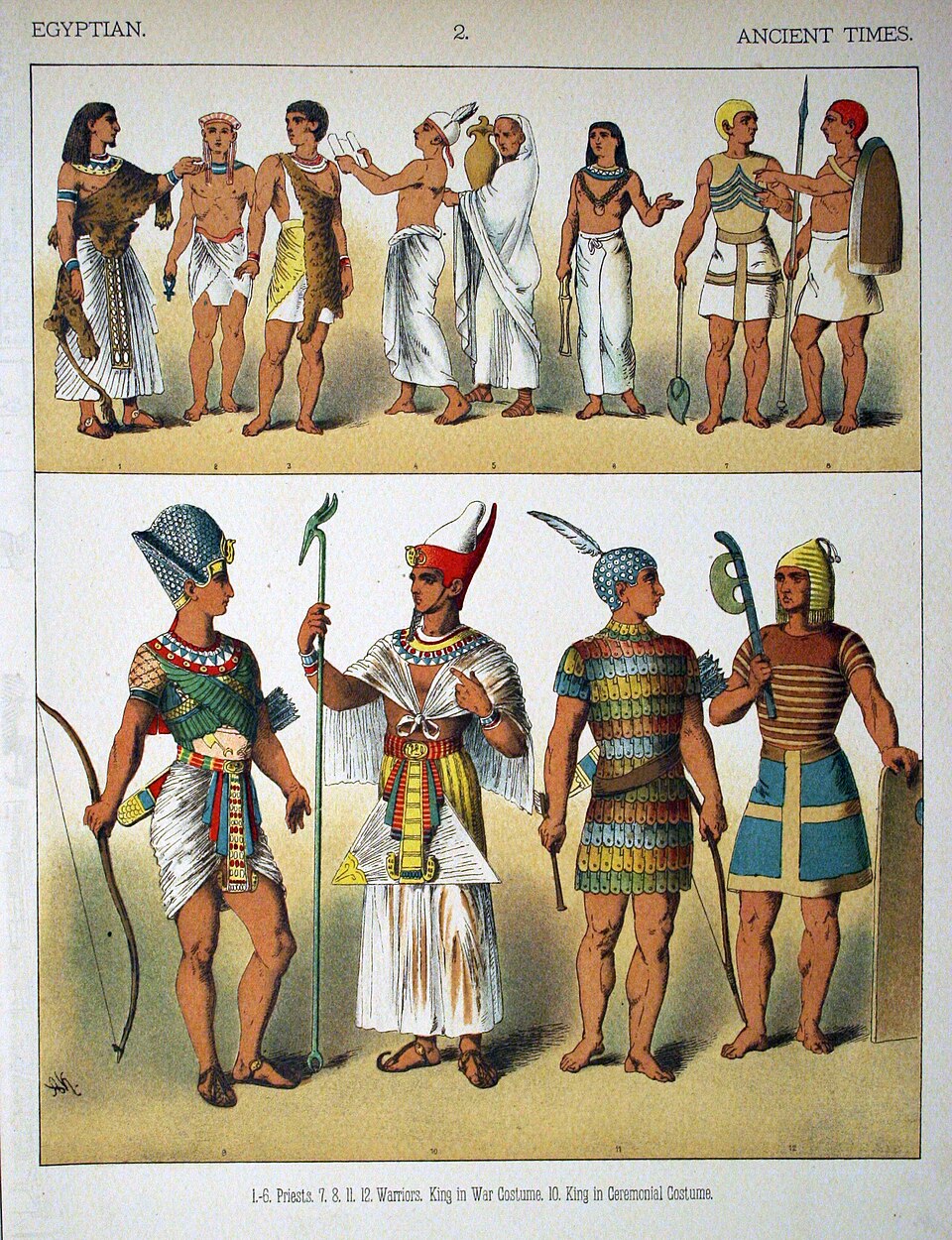
In Egypt, the warm climate and the abundance of flax made linen the fabric of choice for nearly all classes of society. Egyptian garments were remarkably consistent across millennia: men wore the shendyt, a wrapped linen kilt, while women wore the kalasiris, a close-fitting sheath dress with one or two shoulder straps. The finest royal linen was woven so sheer it was nearly transparent, a testament to the extraordinary skill of Egyptian weavers. Pleating, starching, and draping techniques added variety and formality to an otherwise simple wardrobe.
Persian Innovation
The rise of the Persian Empire in the sixth century BCE brought a revolution in clothing construction. Unlike the draped and wrapped garments of Mesopotamia and Egypt, the Persians wore tailored and sewn clothing — fitted tunics, trousers (called anaxyrides), and sleeved coats. This was clothing designed for a horse-riding people, practical for the demands of cavalry warfare and the colder climates of the Iranian plateau.
Persian court dress was famously elaborate. The kandys, a long-sleeved coat draped over the shoulders like a cape, was a mark of high status. Fabrics were dyed in rich colors — purples, blues, and crimsons — and decorated with embroidery and appliqué. The Persian preference for trousers and fitted garments would later influence Greek, Roman, and Central Asian dress traditions, representing a fundamental alternative to the draped clothing of the Mediterranean world.